There are holidays you take simply to get away, and then there are those that have been sitting on the list for years.
For us, the Northern Territory was one of those trips.
We flew into Darwin, picked up a rental car and began the first sector of our Top End adventure — a journey that would take us from Darwin's famous markets and wartime history into the vast landscapes, waterfalls, wetlands and crocodile country of Kakadu National Park.
But before any of that, there was something very important to take care of.
Laksa.
The Real Reason We Came to Darwin
Okay, maybe saying laksa was the main reason for travelling to Darwin is stretching things slightly.
But only slightly.
Our first real stop was the famous Mindil Beach Sunset Market, and there was one thing I was determined to try — a proper Darwin laksa.
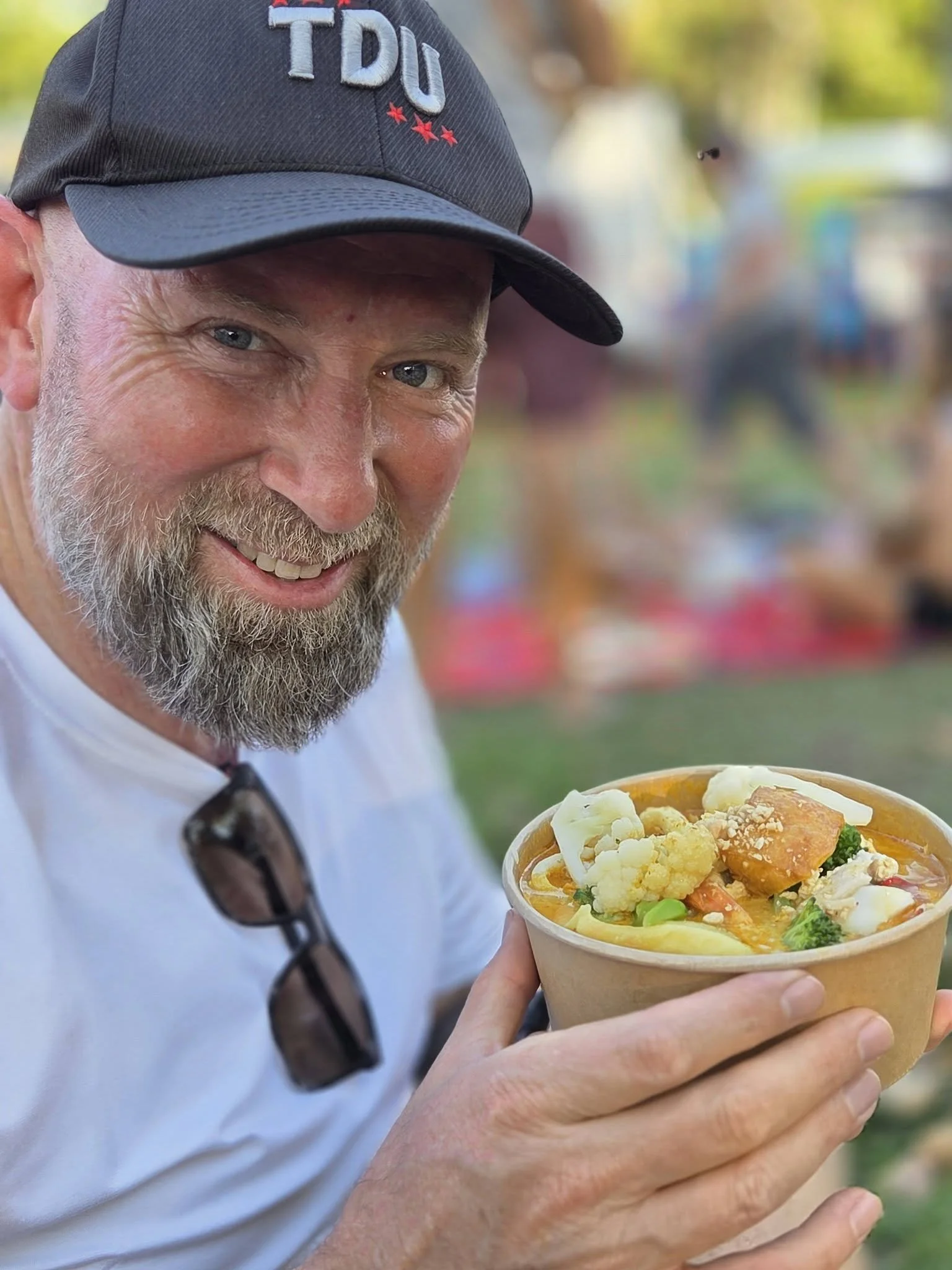
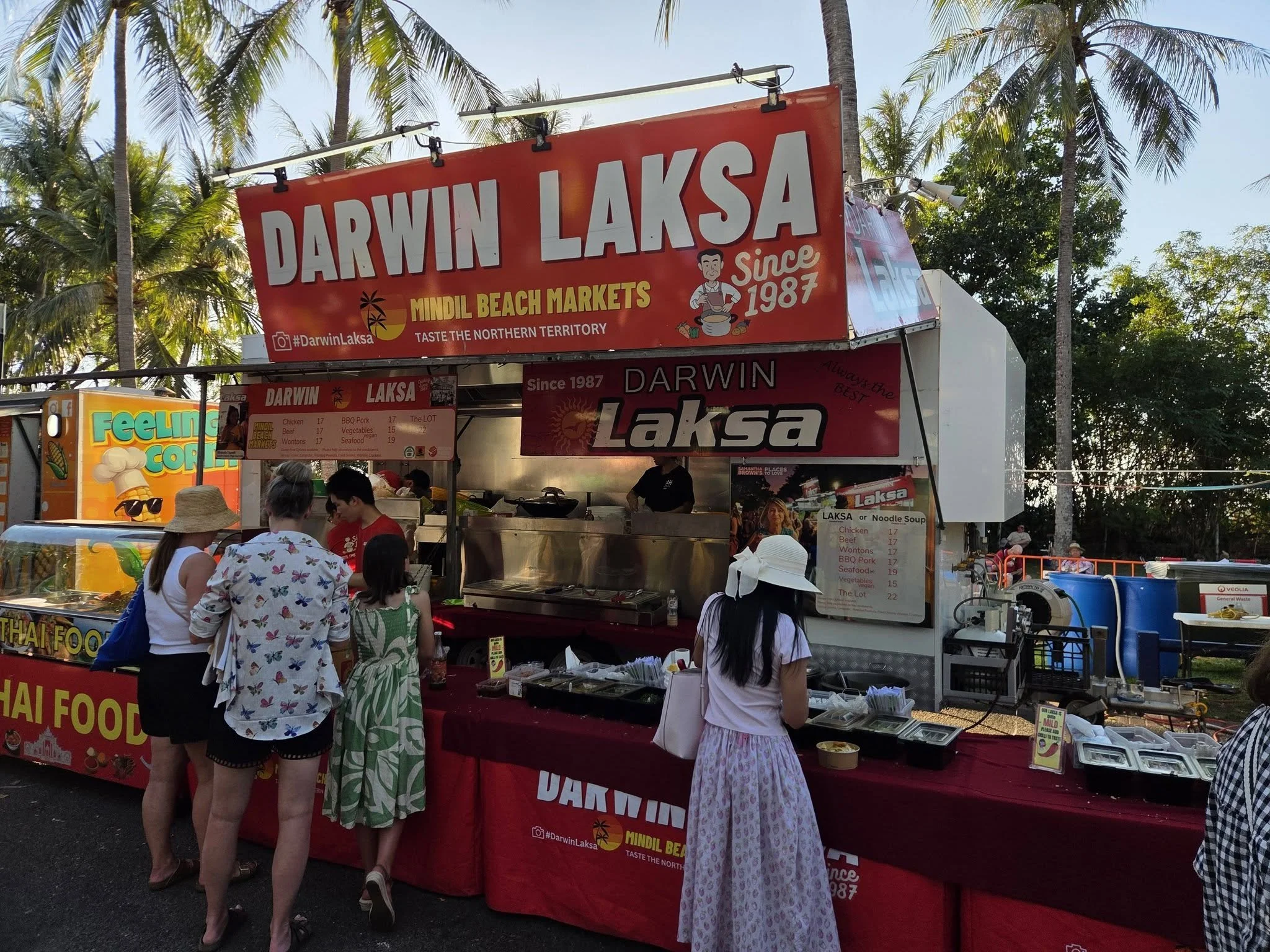
Food is always a big part of travelling for us. You can learn a lot about a place by what people eat, where they gather and what locals get excited about.
Mindil Beach ticks all of those boxes.
Food stalls, people everywhere, the smell of dozens of different cuisines cooking around you and that relaxed outdoor atmosphere that suits Darwin perfectly.
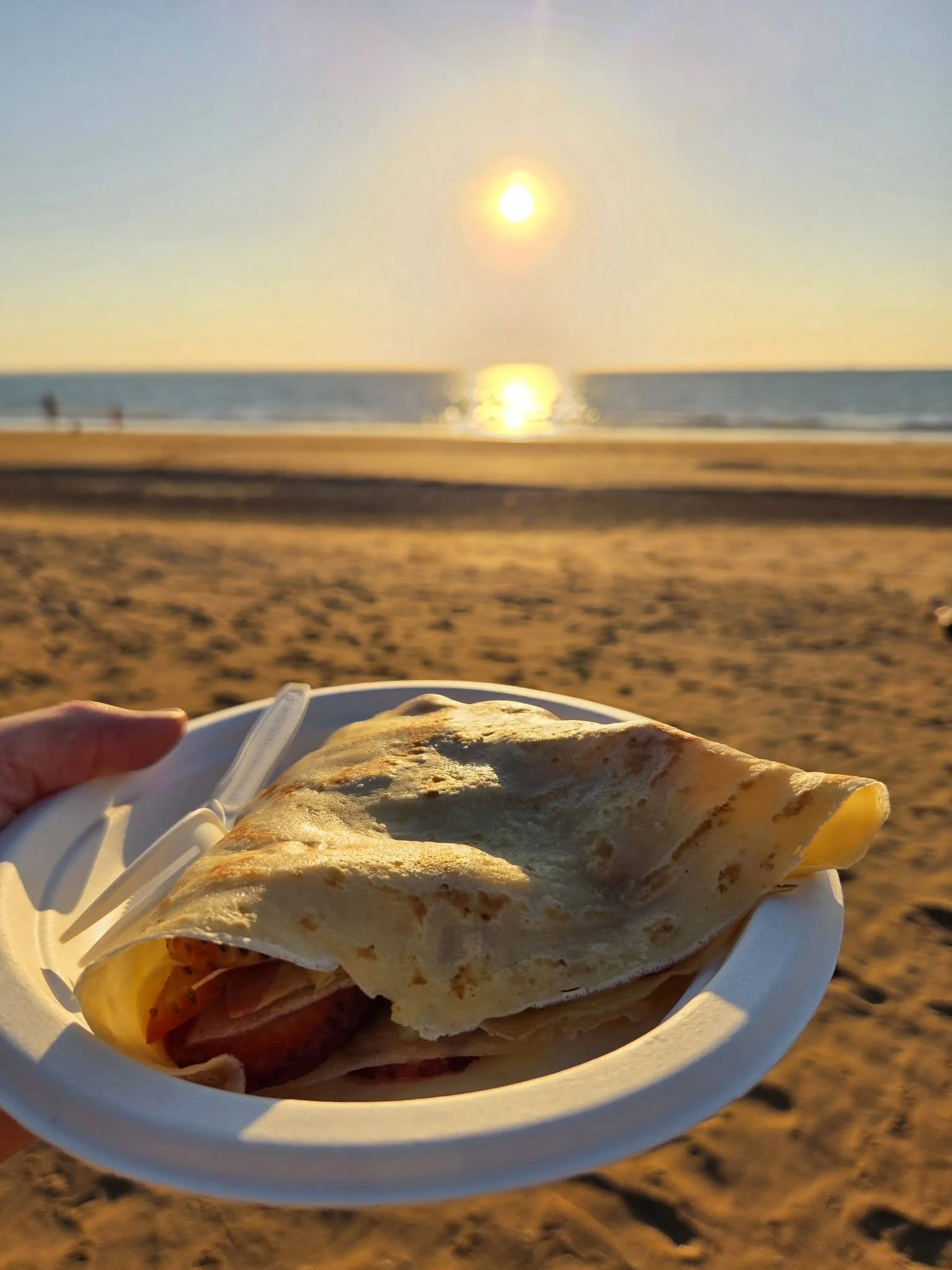
Laksa secured, we headed towards the beach to watch the sun disappear over the water.
And just like that, the holiday had properly started.
Sitting on a beach in Darwin, eating laksa and watching a Top End sunset isn't a bad way to spend your first evening.
A Great Location — With a Catch
Our Darwin base was the Mantra on the Esplanade.
The location was excellent. We were well positioned for getting around the city, the waterfront was nearby and, on paper, it seemed like a great choice.
Unfortunately, the property itself was really showing its age.
It felt quite run down and desperately in need of some attention. But the thing we'll probably remember most was the car park.
A family of cats appeared to have taken up residence in the garage.
The resulting odour was unbelievable.
Every trip down to the rental car became an exercise in holding your breath and getting out of there as quickly as possible.
Thankfully, Darwin itself gave us much better memories.
Darwin's Wartime Story
One thing I hadn't fully appreciated before visiting was just how significant Darwin was during the Second World War.
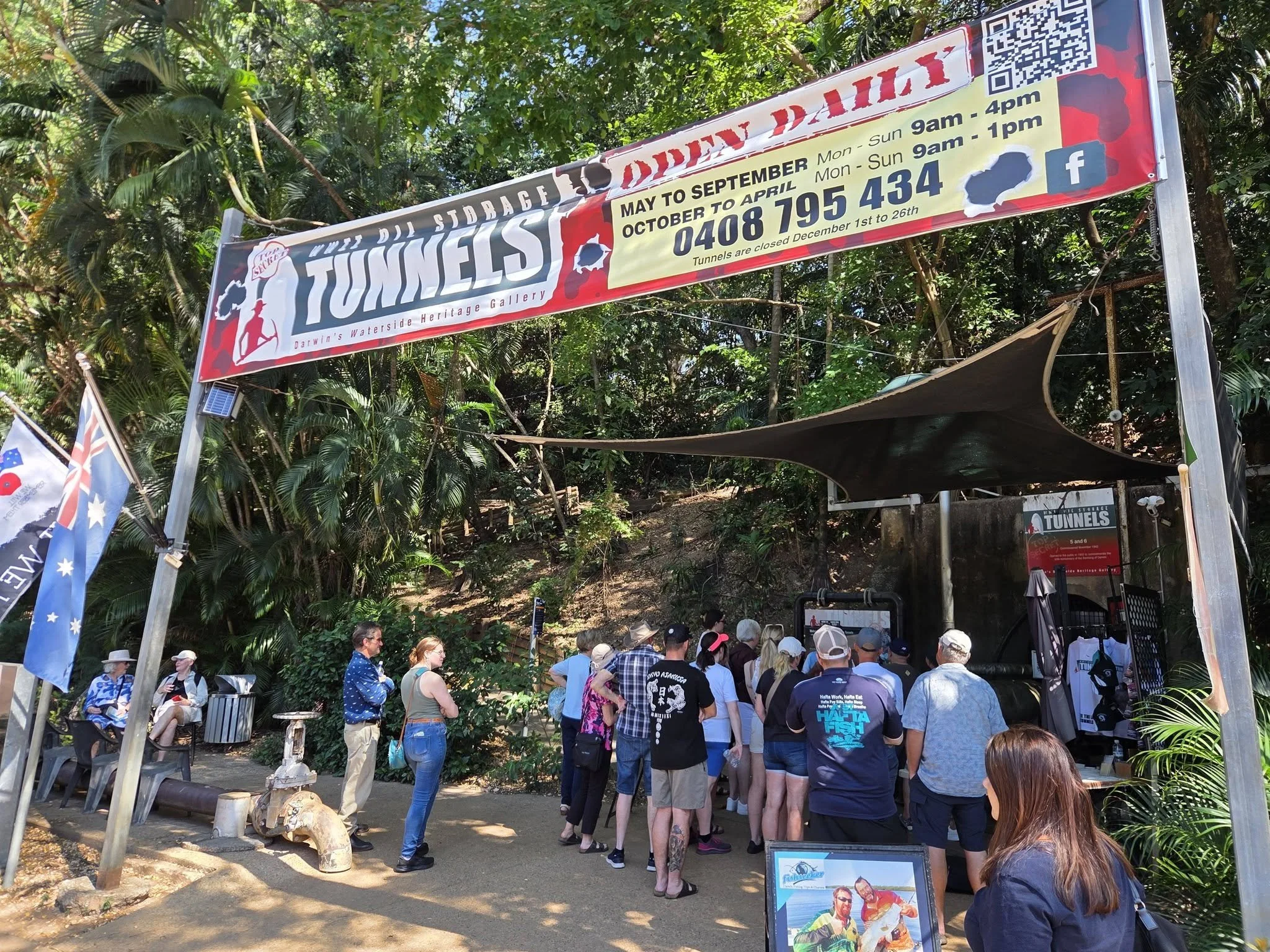
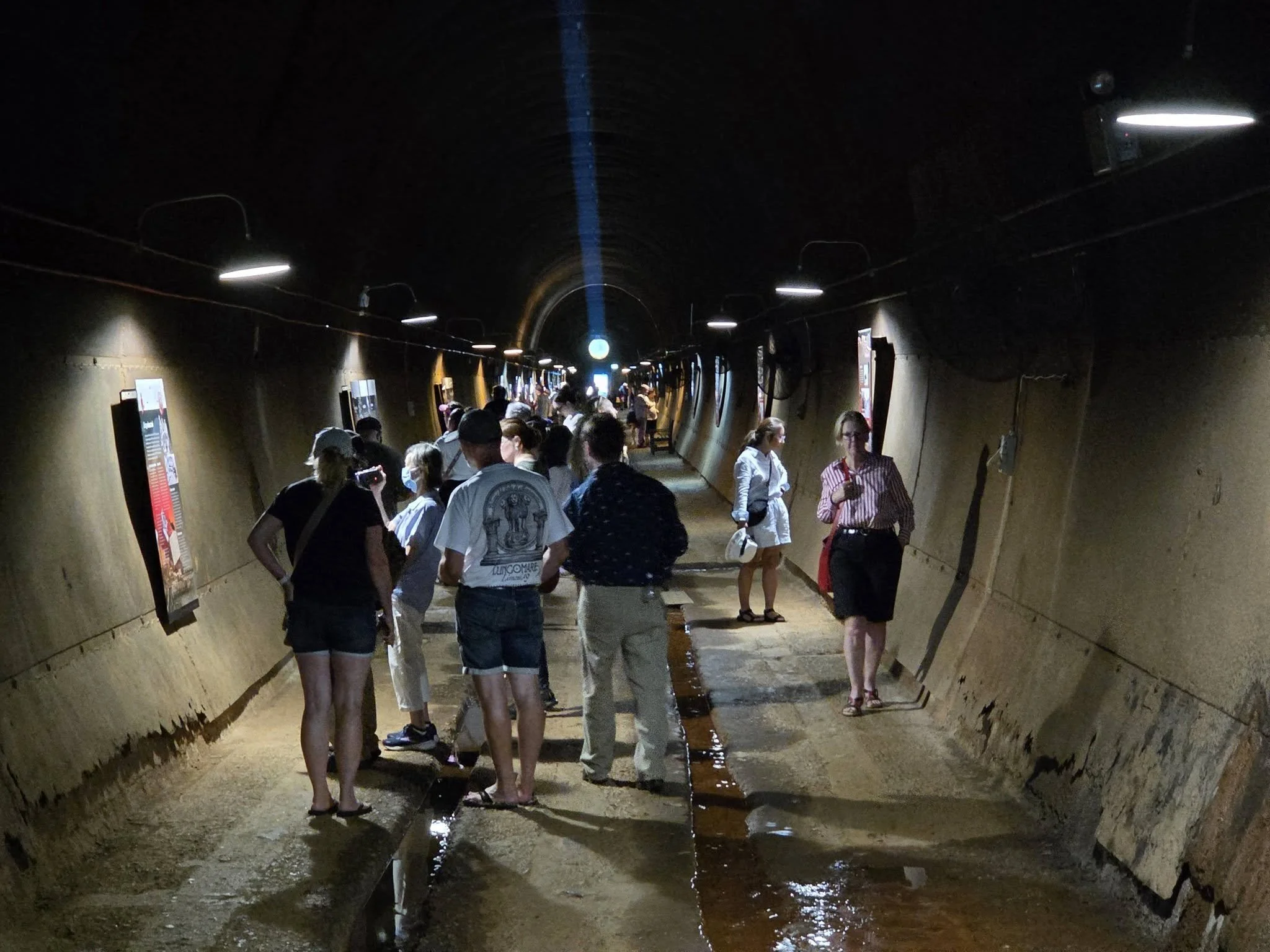
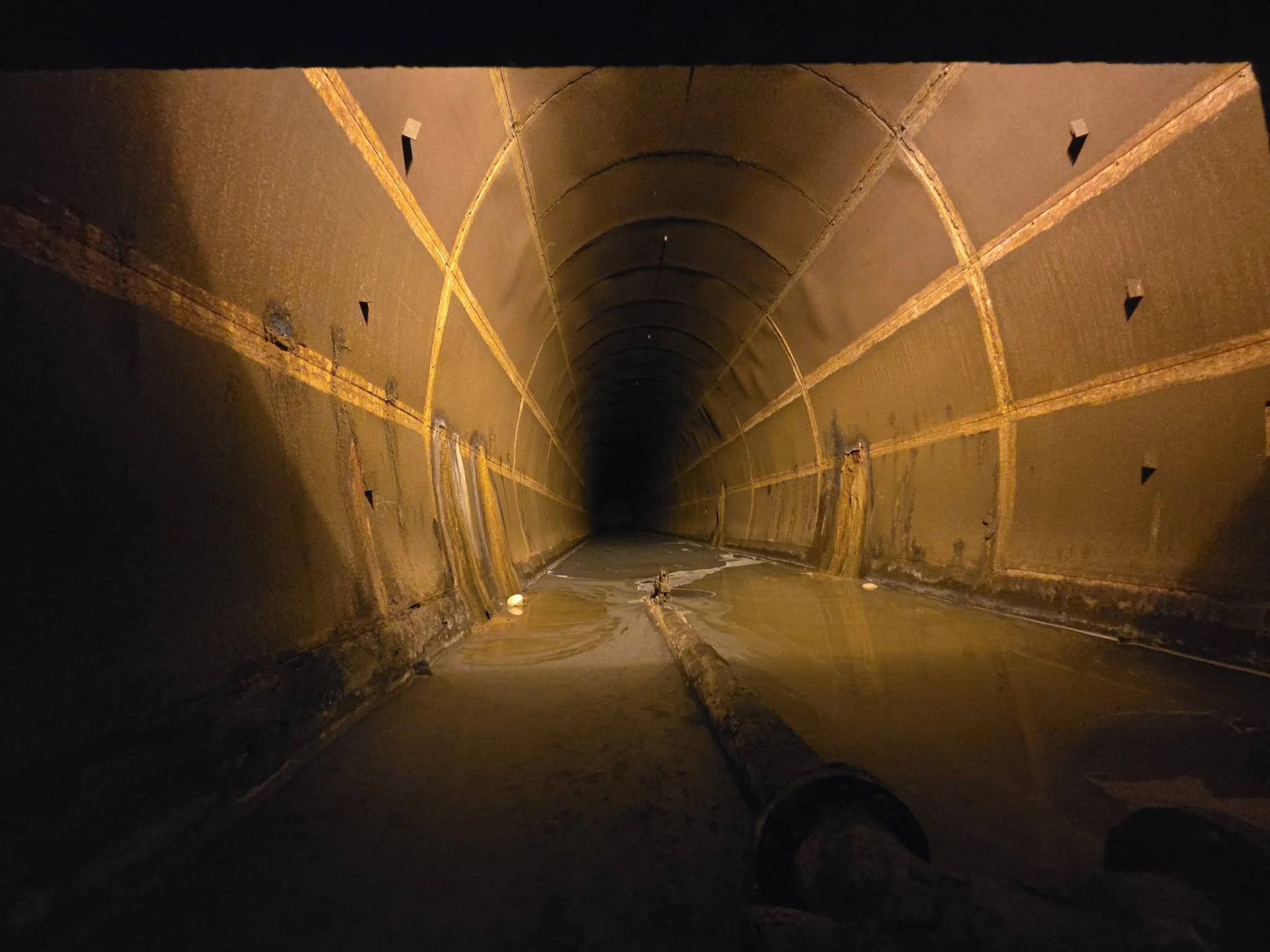
We visited the WWII Oil Storage Tunnels, originally constructed to protect Darwin's oil supplies following the Japanese bombing of the city.
Walking through the tunnels gives you a small glimpse into just how seriously the threat to Australia's north was taken during the war.
But it was another Darwin attraction that really brought that history to life.
The Royal Flying Doctor Service Darwin Tourist Facility was incredible.
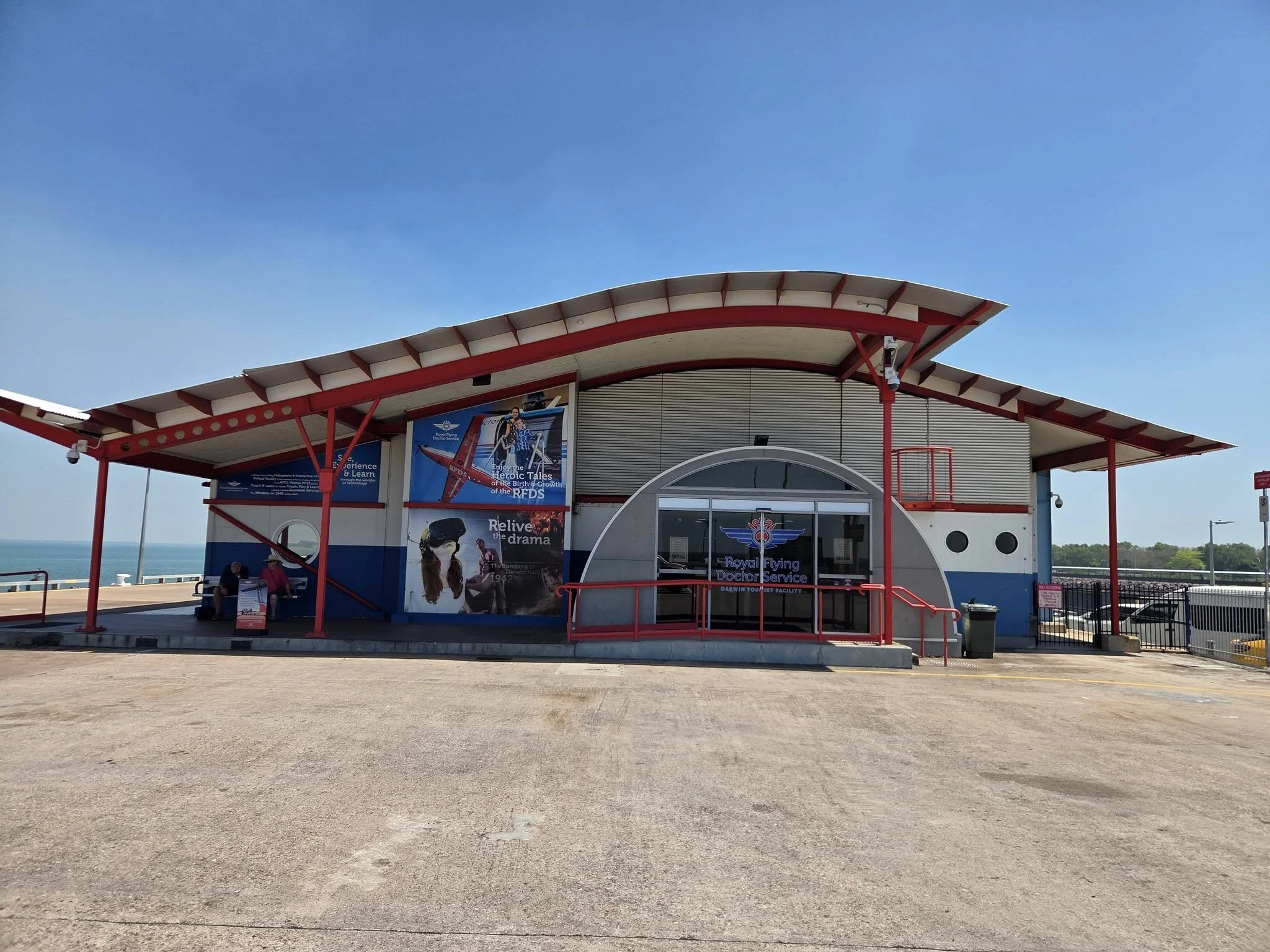
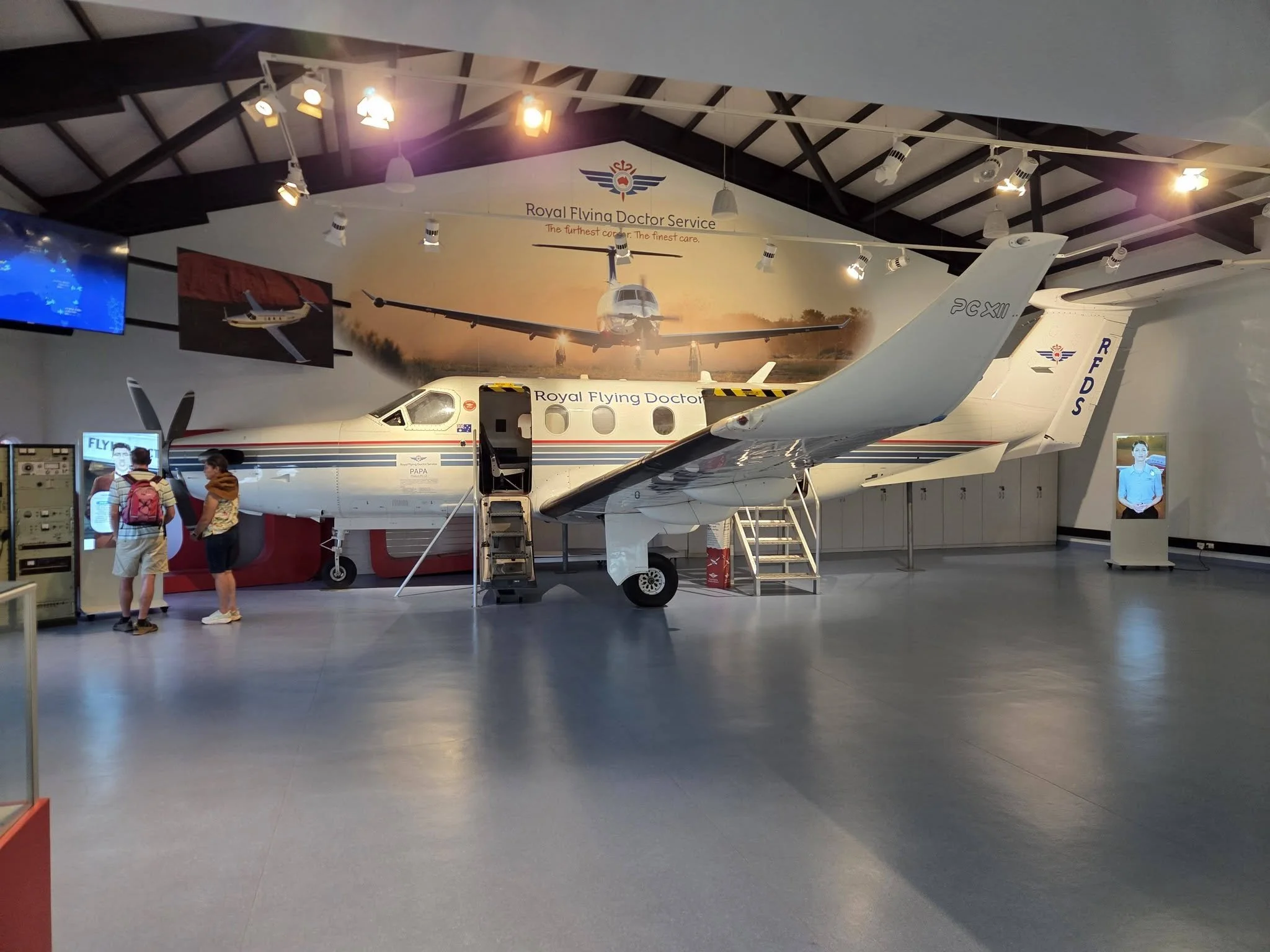
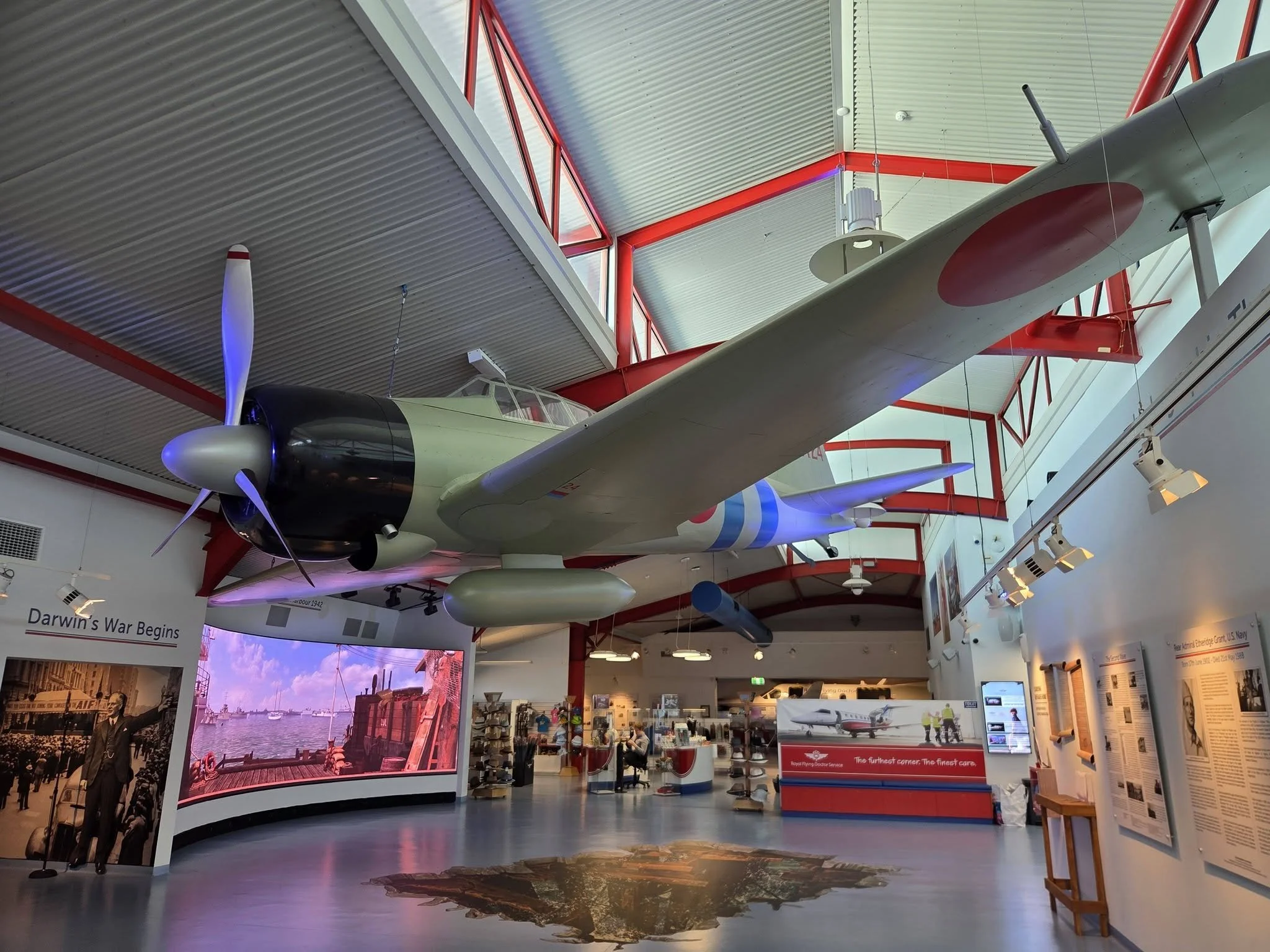
Obviously, there's the fascinating story of the Royal Flying Doctor Service and the role it continues to play across remote Australia, but the facility also tells the story of the bombing of Darwin.
The standout for me was the virtual-reality experience.
Put the headset on and suddenly you're immersed in the bombing of Darwin.
Rather than simply reading dates and facts from an information board, you're given a sense of the chaos and intensity of what happened.
It was powerful, incredibly well done and easily one of the highlights of our time in Darwin.
Dinner at Crustaceans
Of course, eventually our attention returned to food.
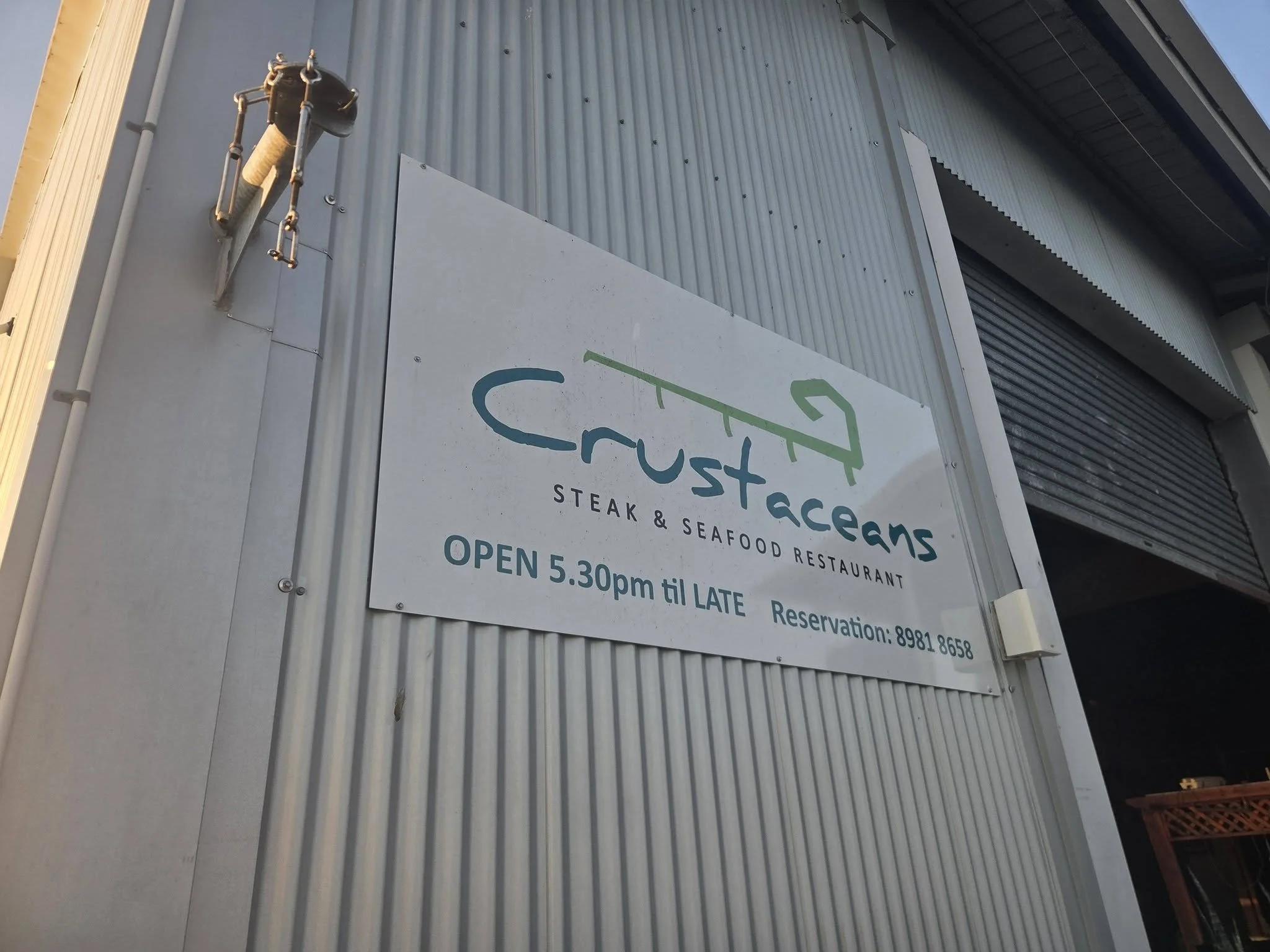
We headed to Crustaceans on the Wharf for dinner, enjoying seafood by the water and another warm Darwin evening.
There's something about eating outdoors in the Top End that immediately puts you into holiday mode.
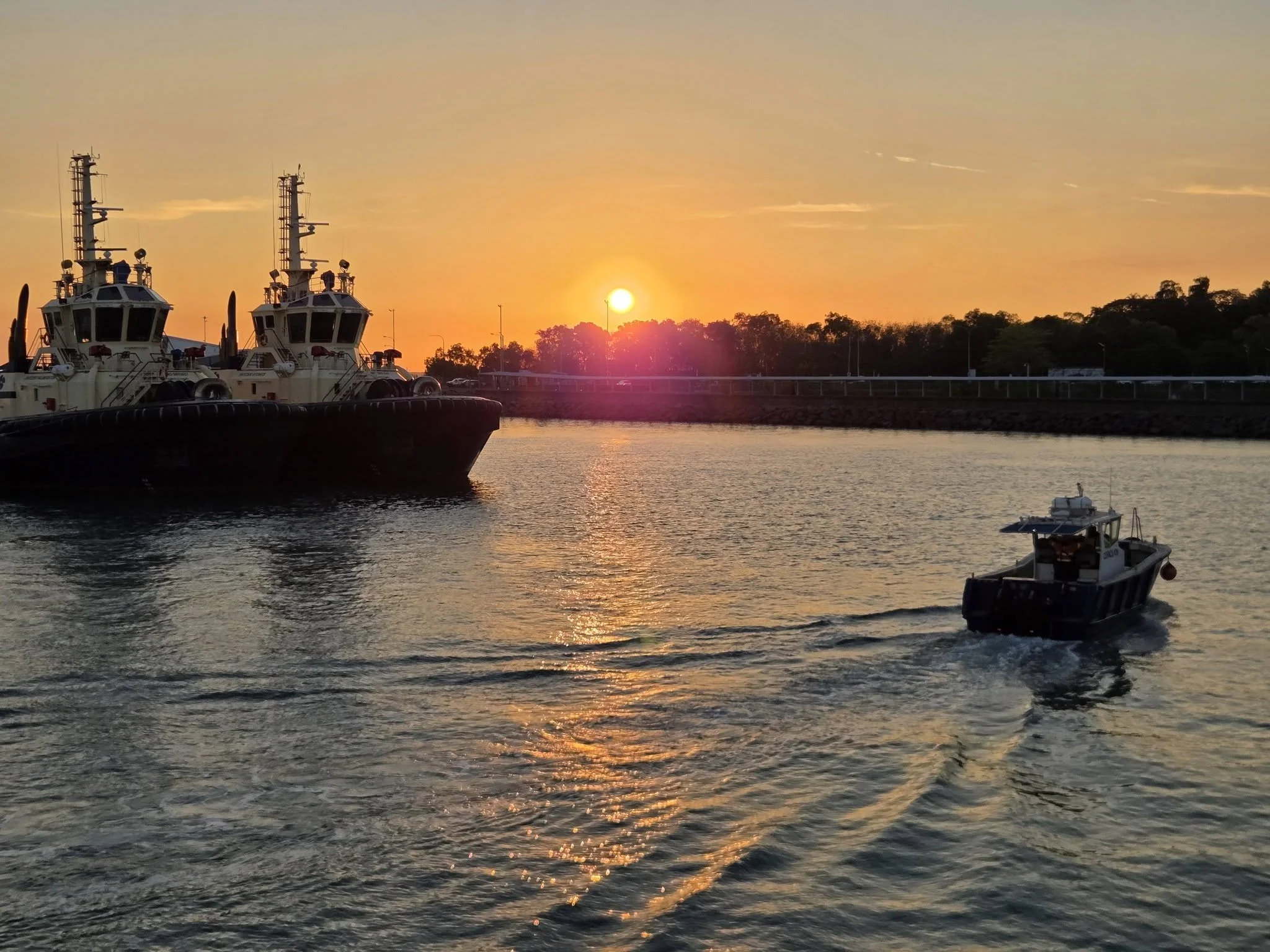
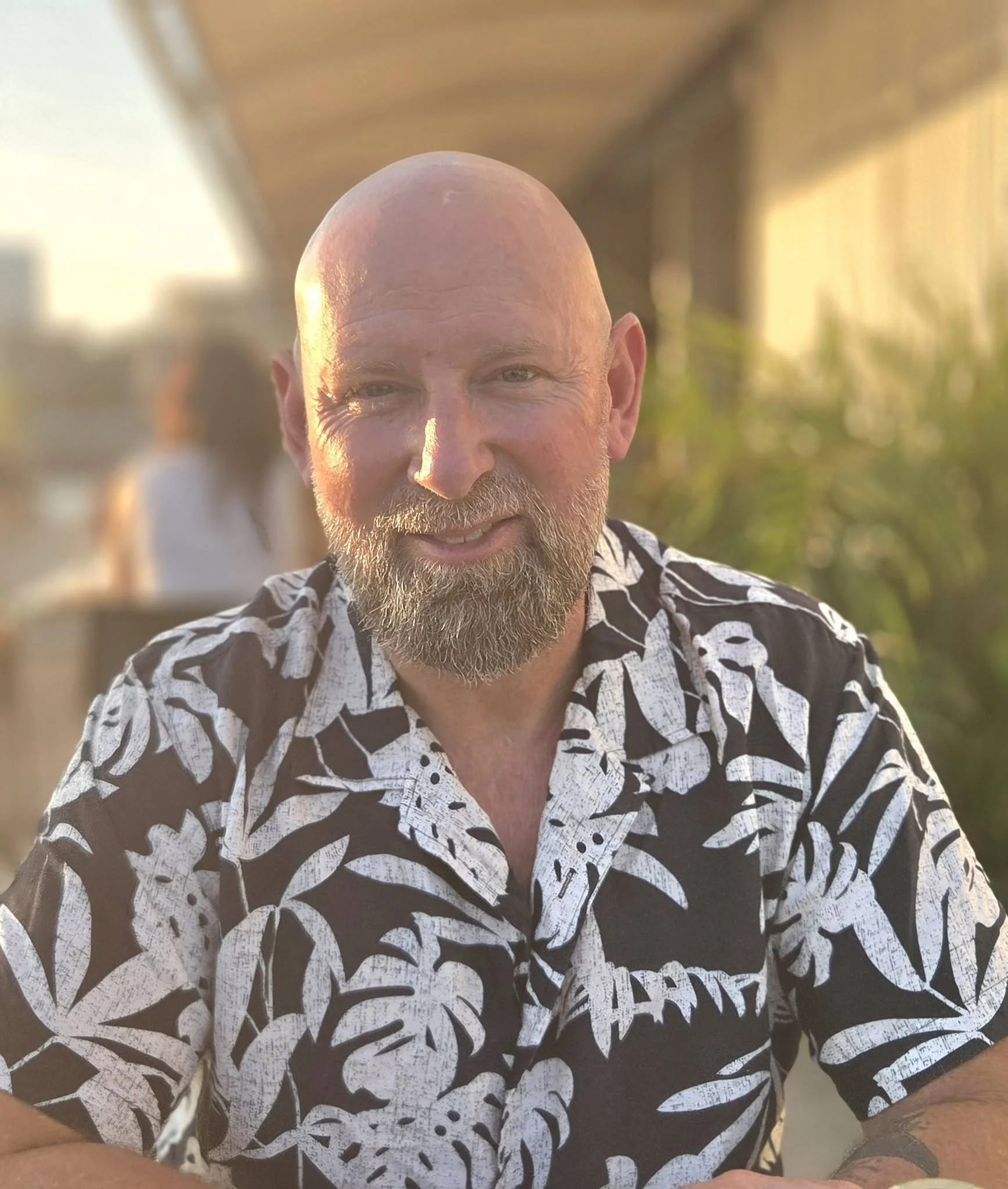
Darwin had given us history, food and a cracking sunset.
Now it was time to leave the city behind.
We were heading into Kakadu.
The Road to Kakadu
There's something I love about a road trip.
Load up the car, point it towards somewhere you've never been and watch the landscape change through the windscreen.
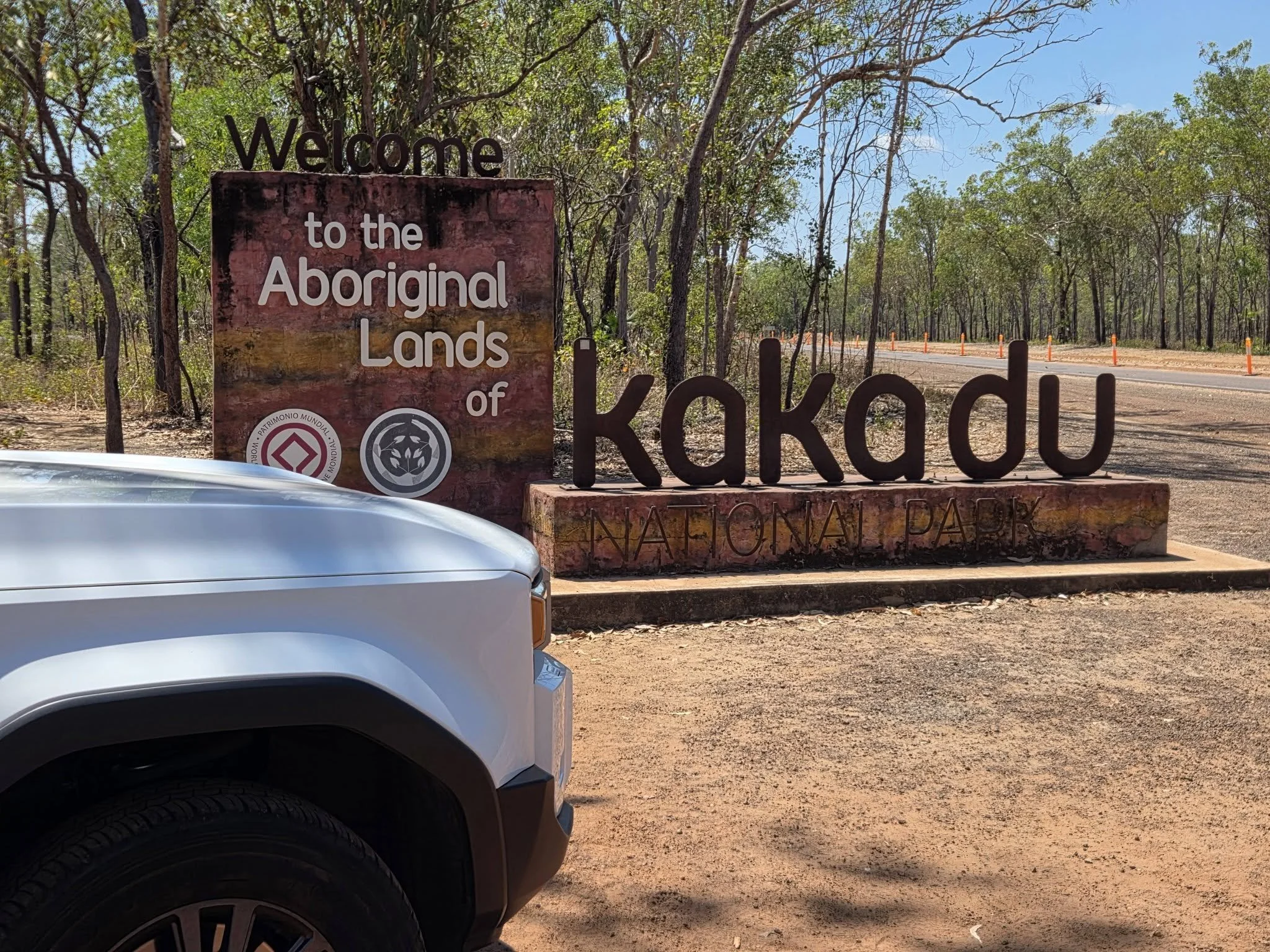
Leaving Darwin, our next destination was Jabiru in the heart of Kakadu National Park.
But there was one essential stop along the way.
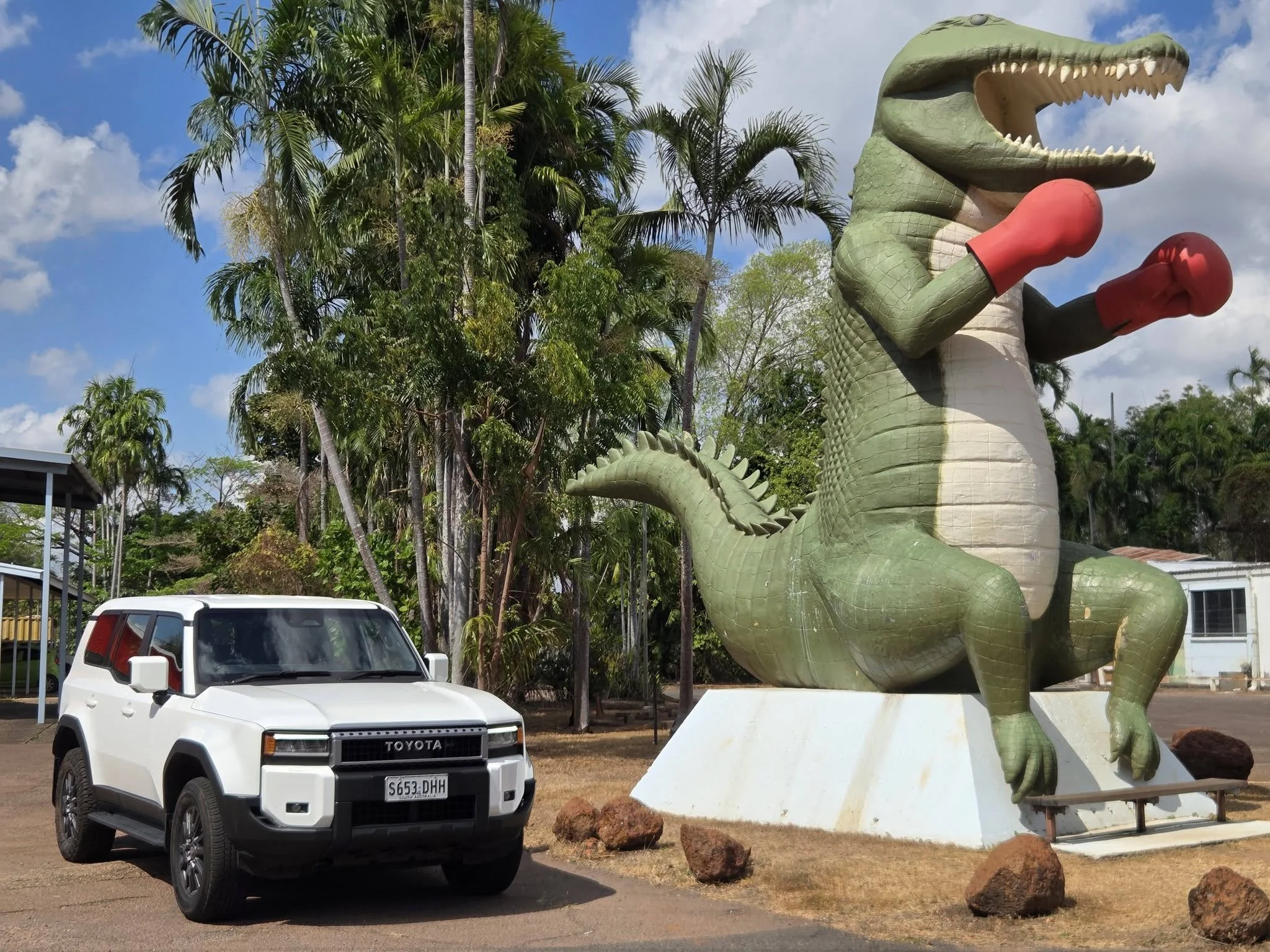
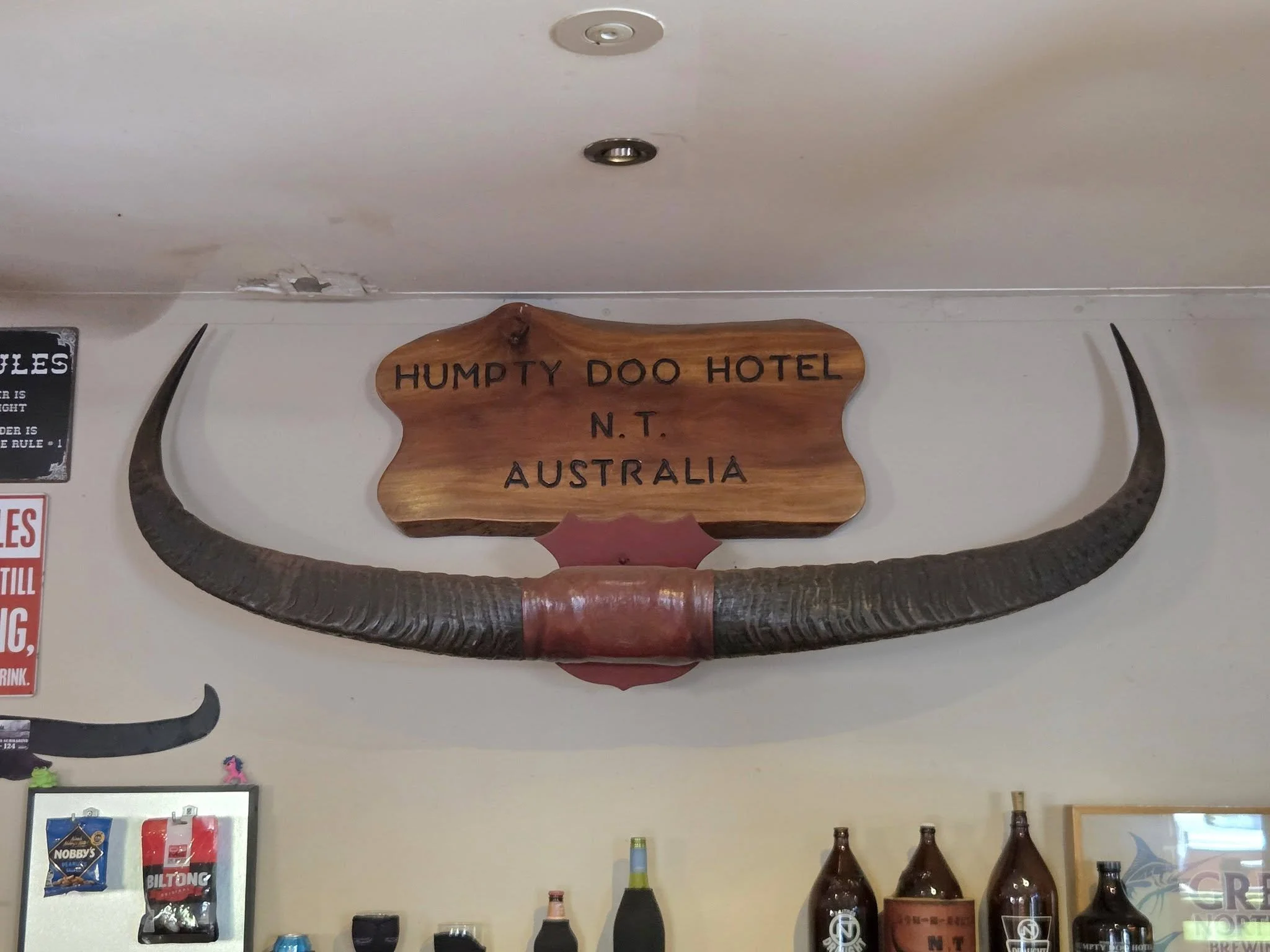
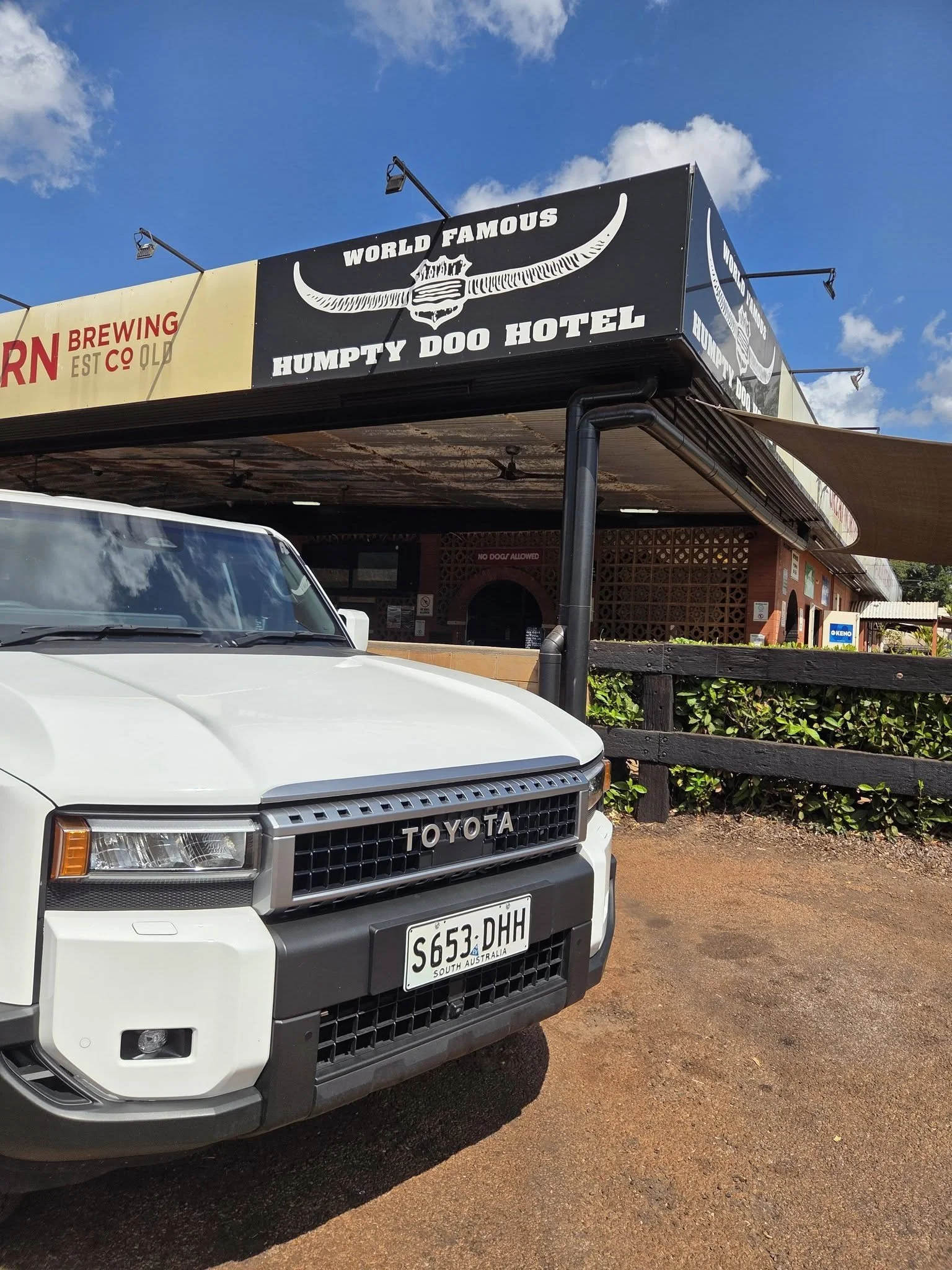
The Humpty Doo Hotel.
With a name like that, how could you possibly drive past?
It's one of those classic Territory places that has developed a reputation of its own, and stopping there felt like part of the journey rather than simply somewhere to break up the drive.
Then it was back into the car and onwards towards Kakadu.
The further we travelled, the more the landscape opened up.
Traffic disappeared.
Distances stretched out.
And it began to feel like we'd properly entered the Top End.
Sleeping Inside a Crocodile
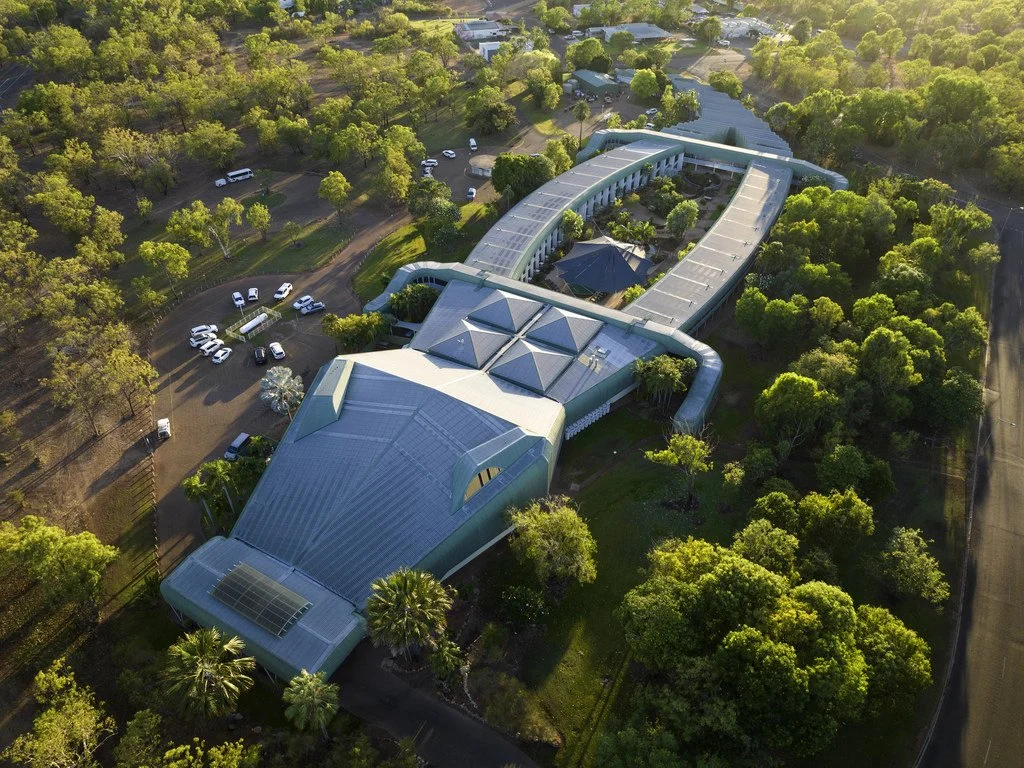
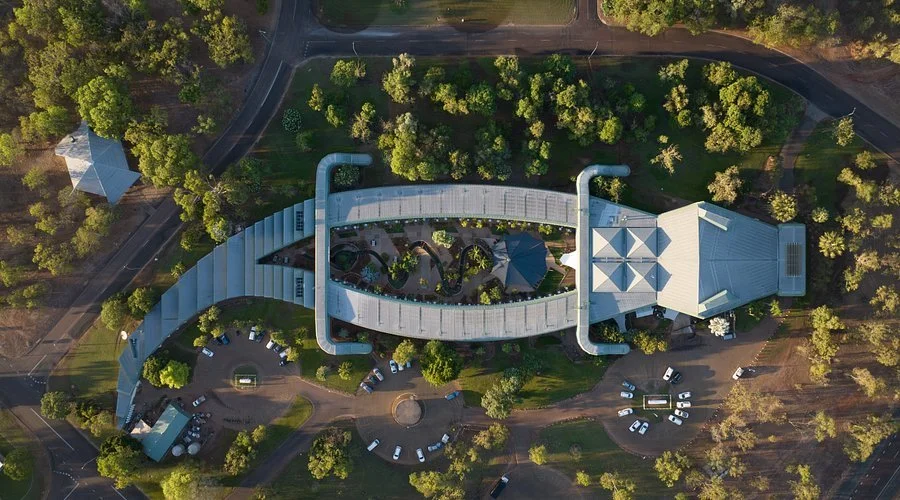
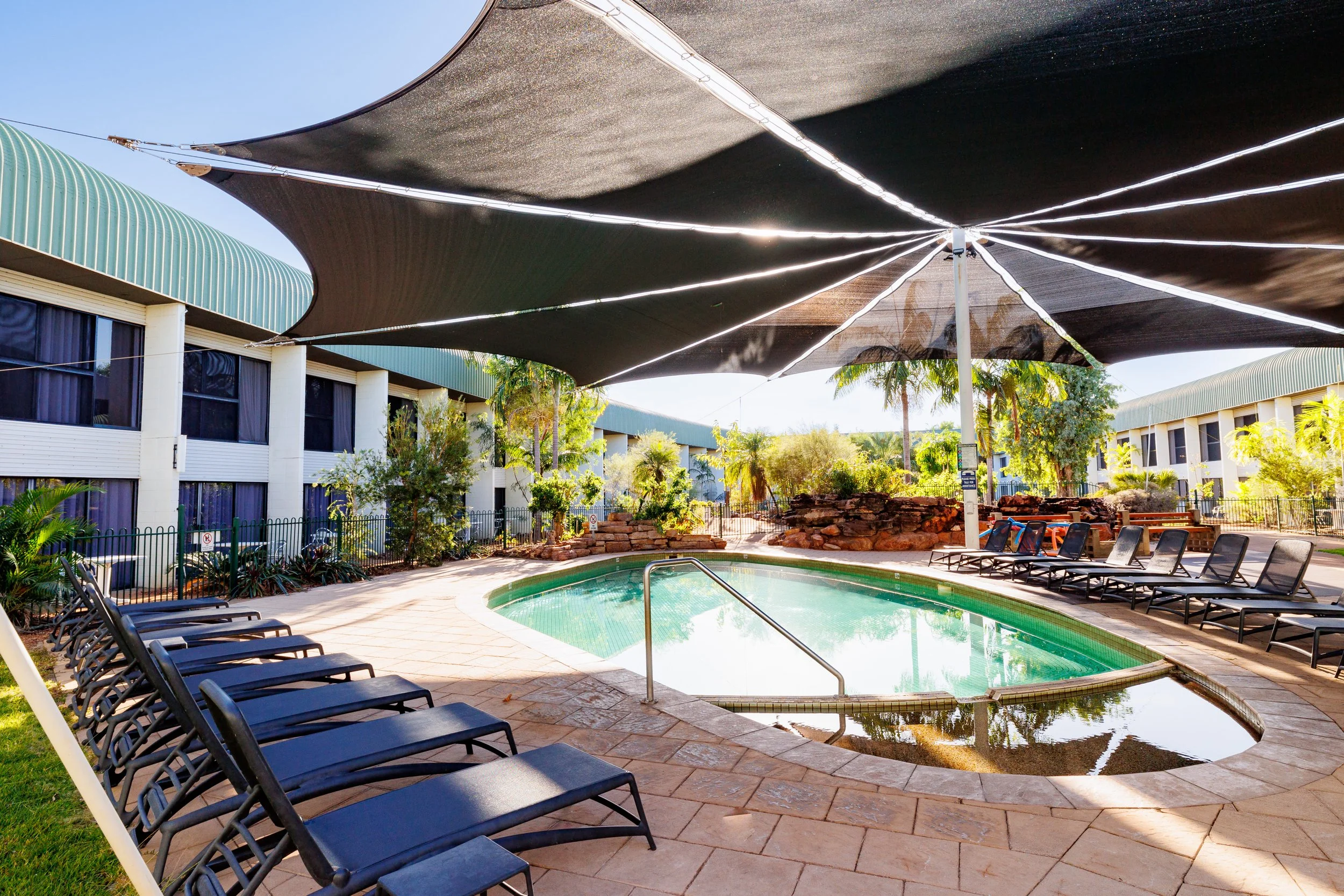
Our home in Kakadu was the Mercure Kakadu Crocodile Hotel in Jabiru.
And yes, it's shaped like a giant crocodile.
From above, the entire hotel forms the shape of a saltwater crocodile, which has to make it one of the more uniquely Australian hotels you can stay in.
Jabiru became our base as we headed out each day to explore Kakadu.
And that's when you begin to understand just how enormous this place is.
Kakadu isn't somewhere you simply pop into and tick off a few attractions.
The distances are big, conditions change with the seasons and sometimes the places you want to visit simply aren't accessible.
You have to travel on Kakadu's terms.
Cruising Yellow Water
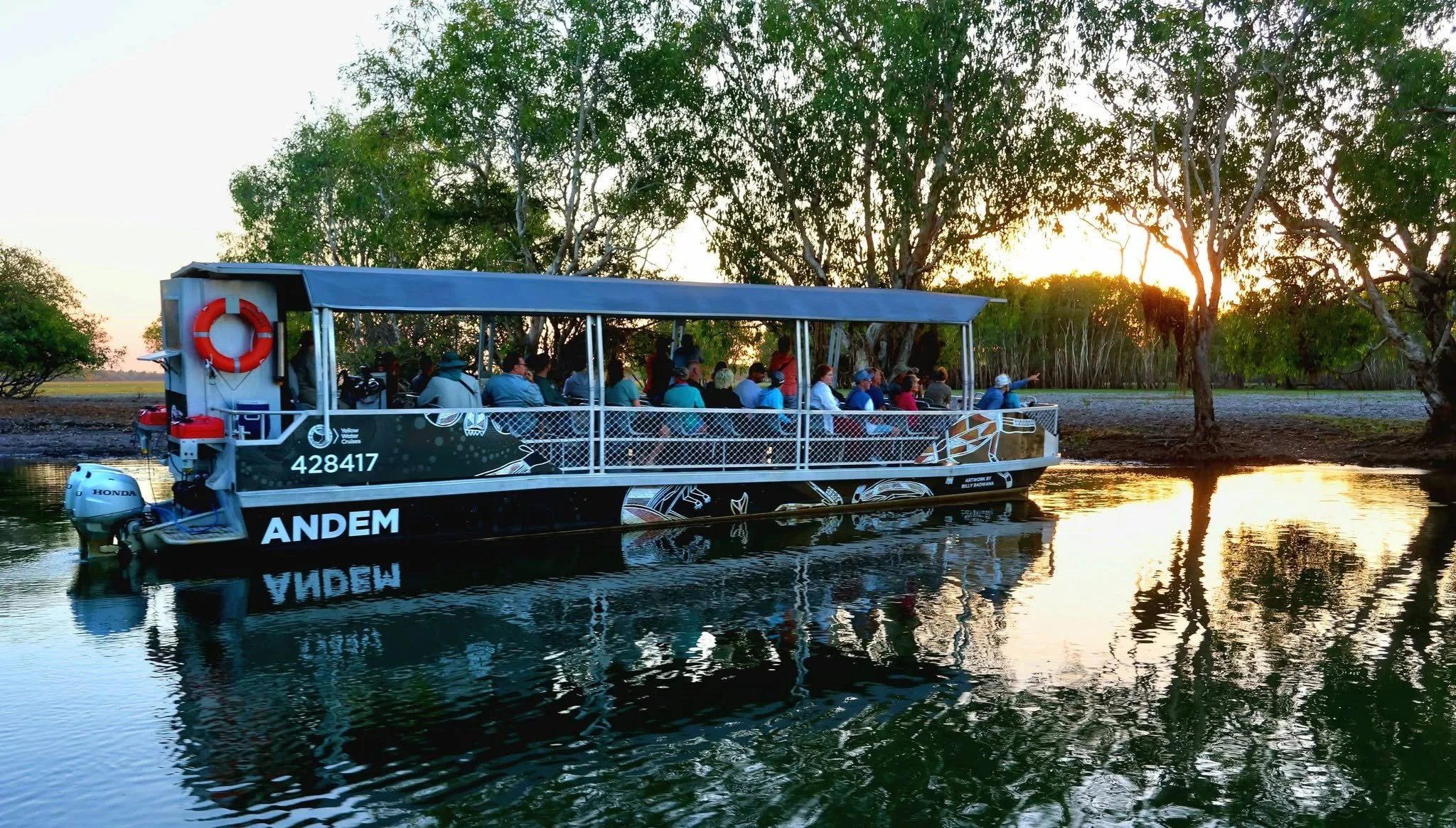
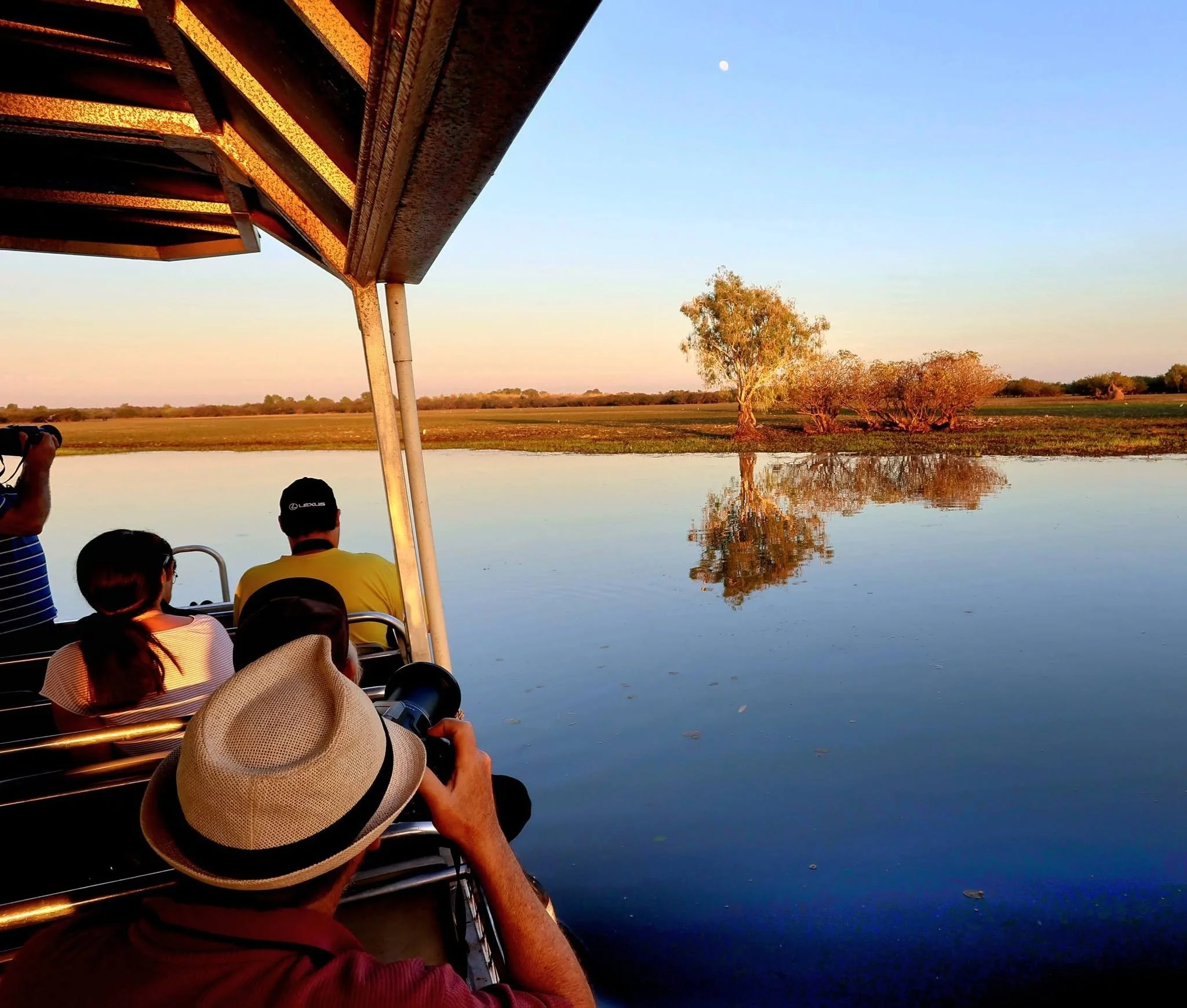
We headed to Cooinda for one of Kakadu's best-known experiences — the Yellow Water cruise.
This was one of the highlights of the entire trip.
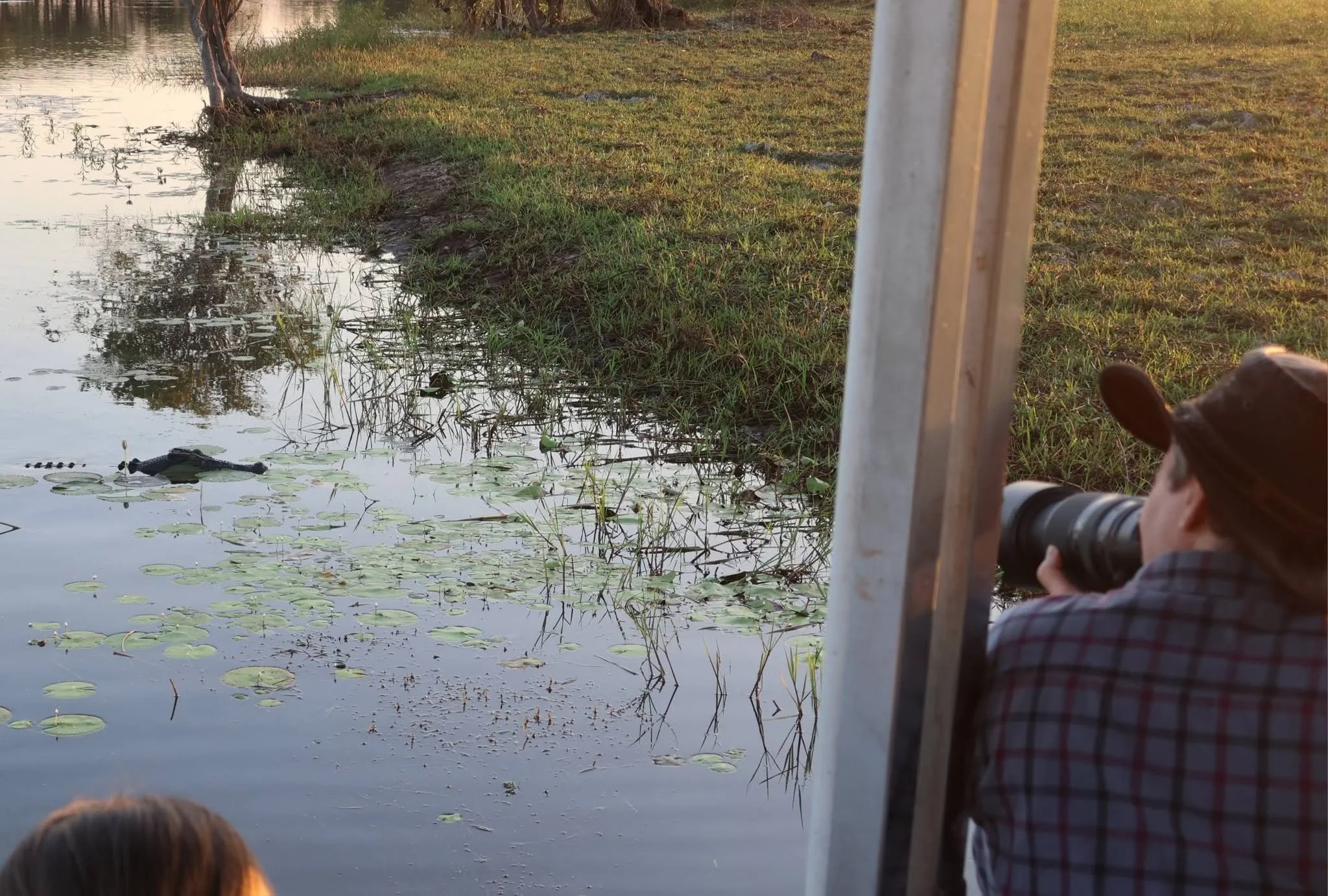
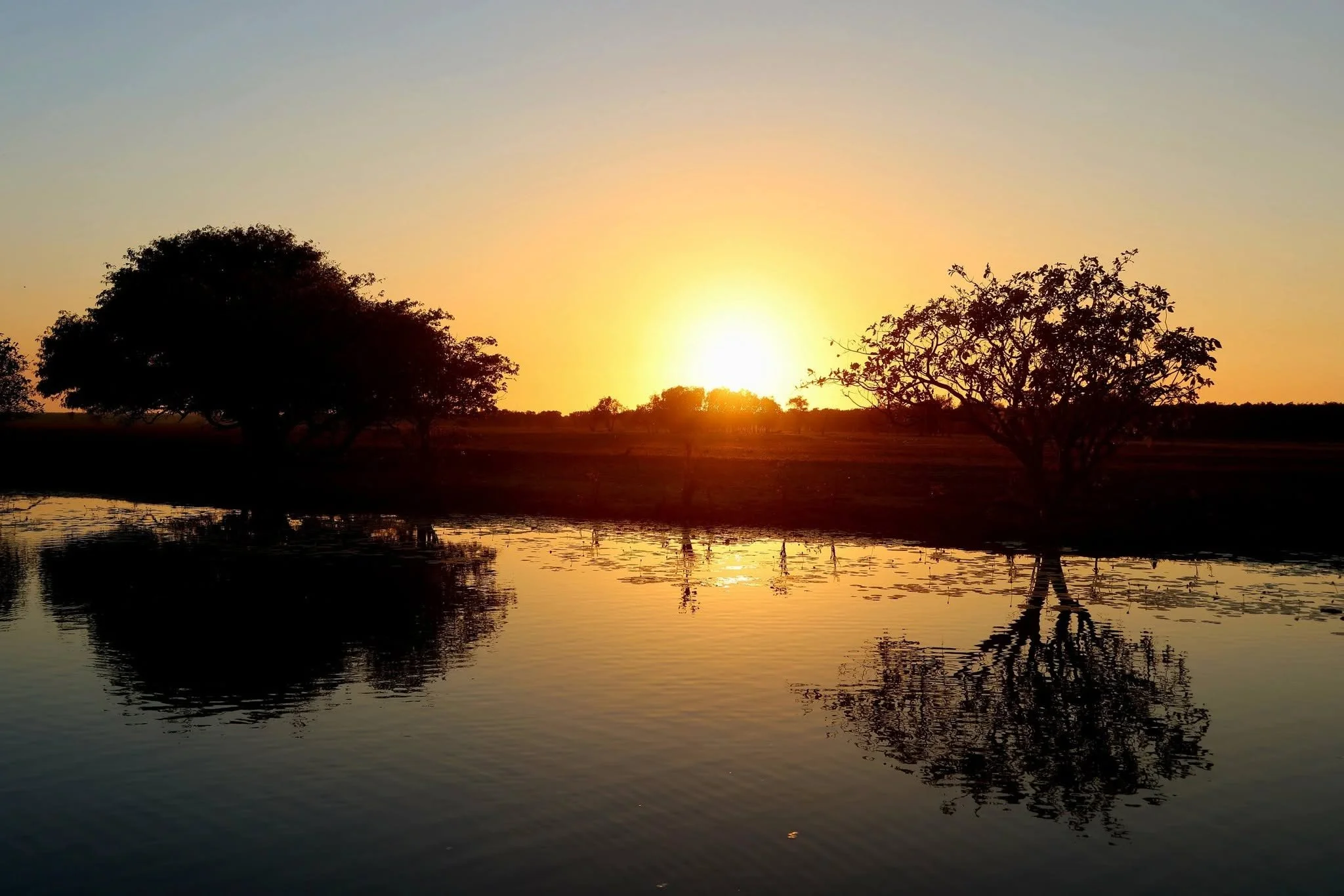
Slowly travelling through the wetlands gives you the chance to stop looking through a car windscreen and really take in the environment.
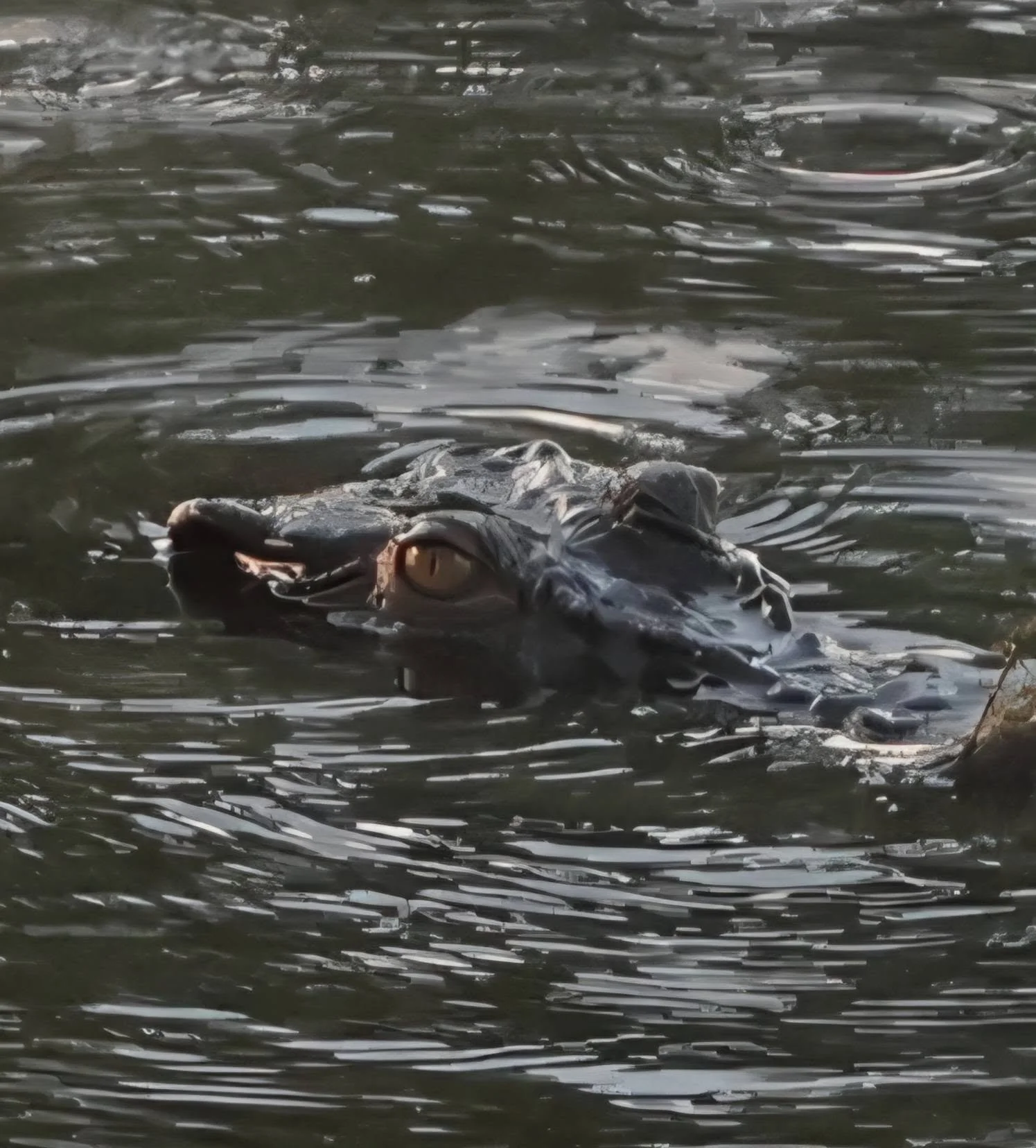
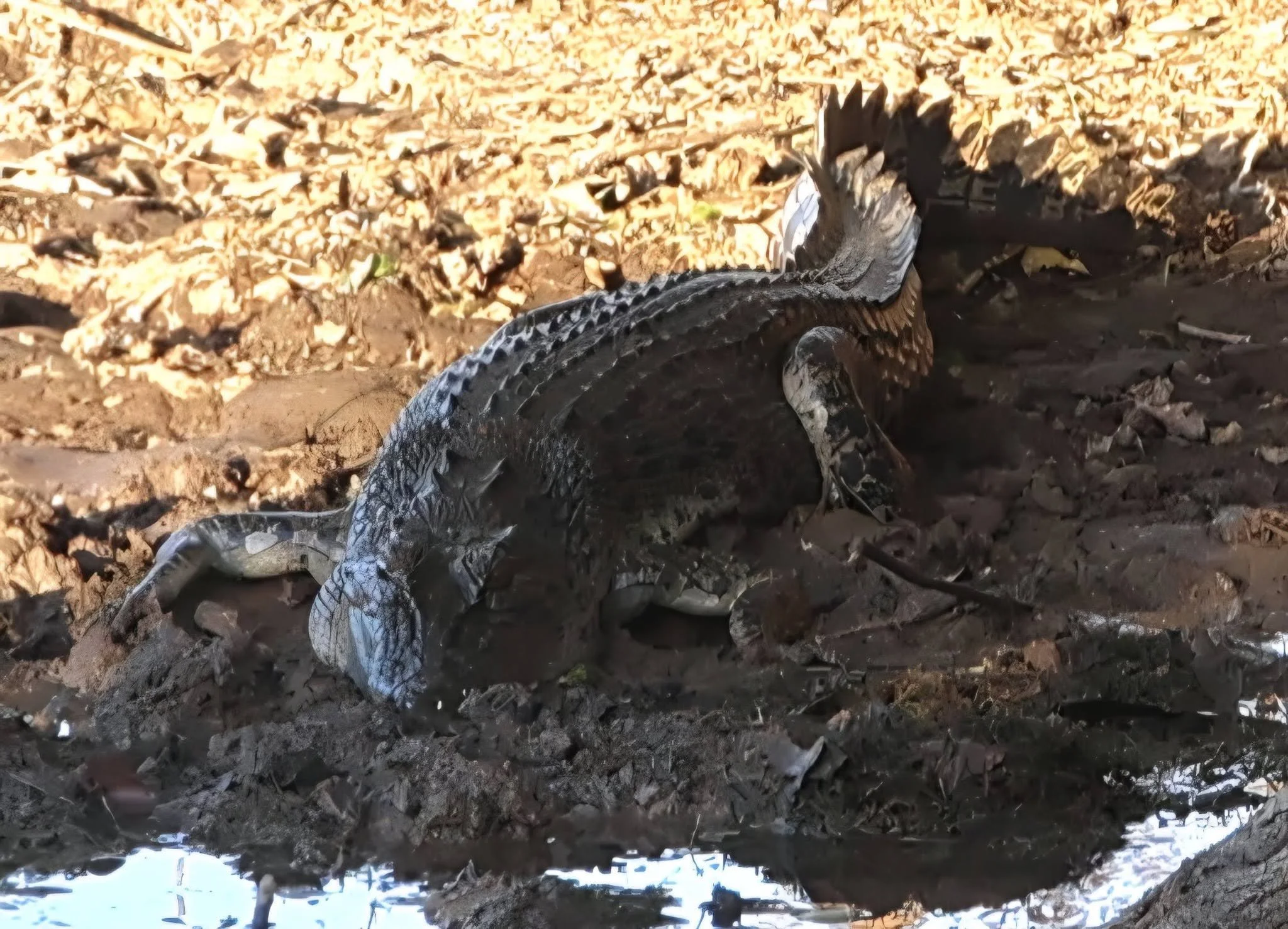
Birdlife surrounds you, the wetlands seem to stretch forever and somewhere amongst it all are the animals everyone secretly hopes to see.
Crocodiles.
Seeing one in the wild is very different to seeing one at a wildlife park.
There's no fence.
No enclosure.
You're in their world.
And that changes the experience completely.
Ancient Stories
Kakadu is spectacular to look at, but its significance goes far beyond the landscape.
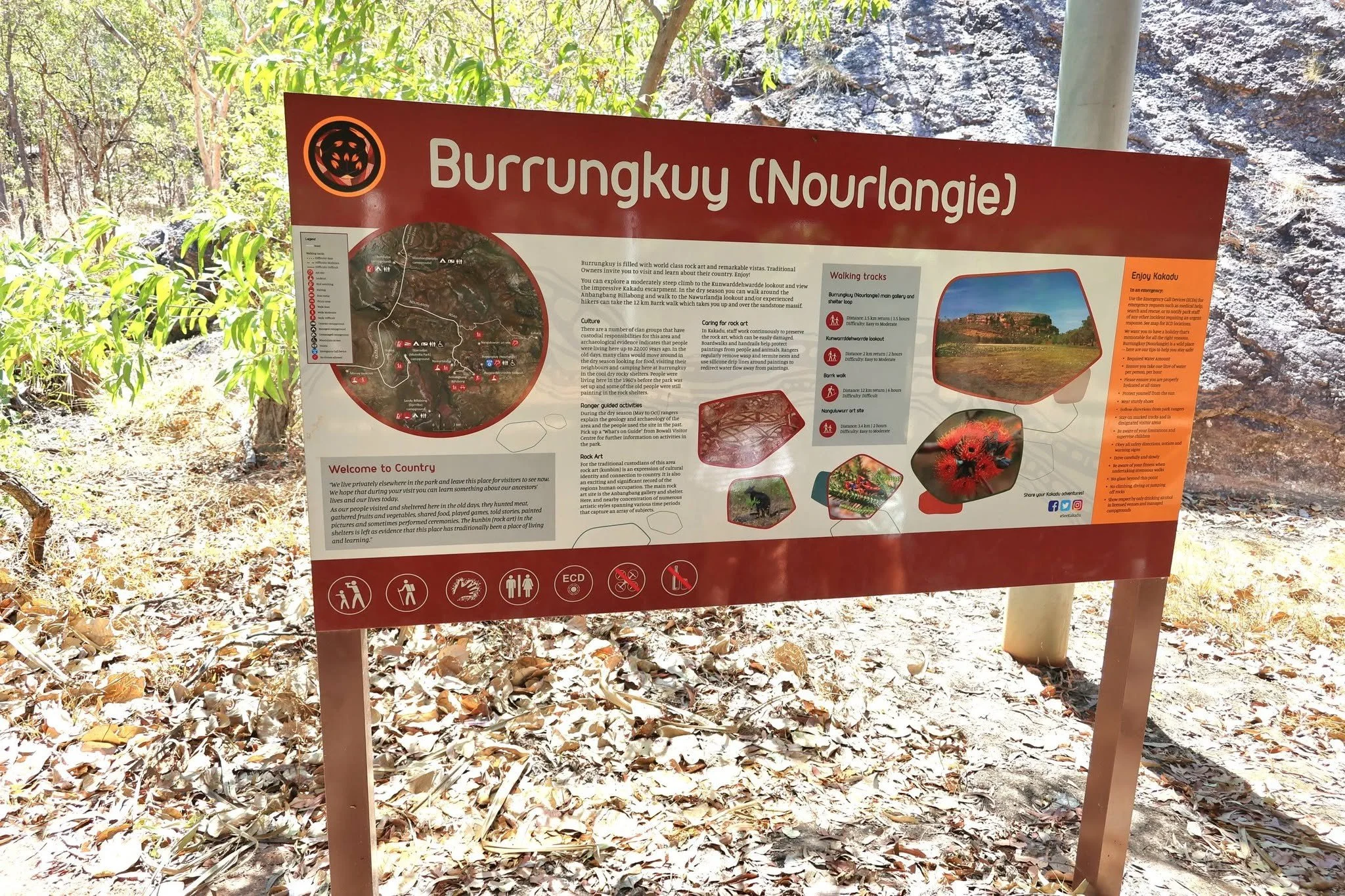
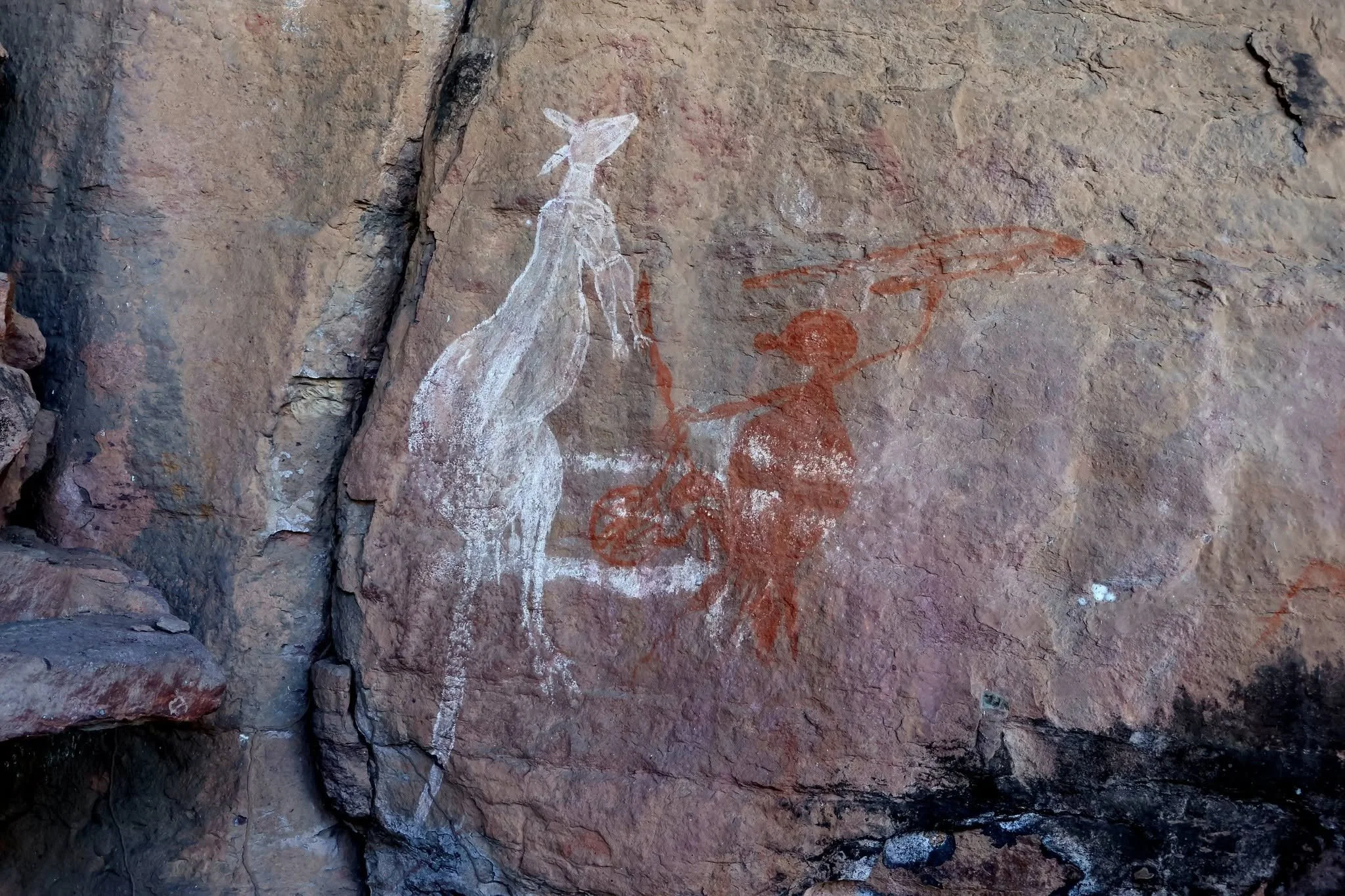
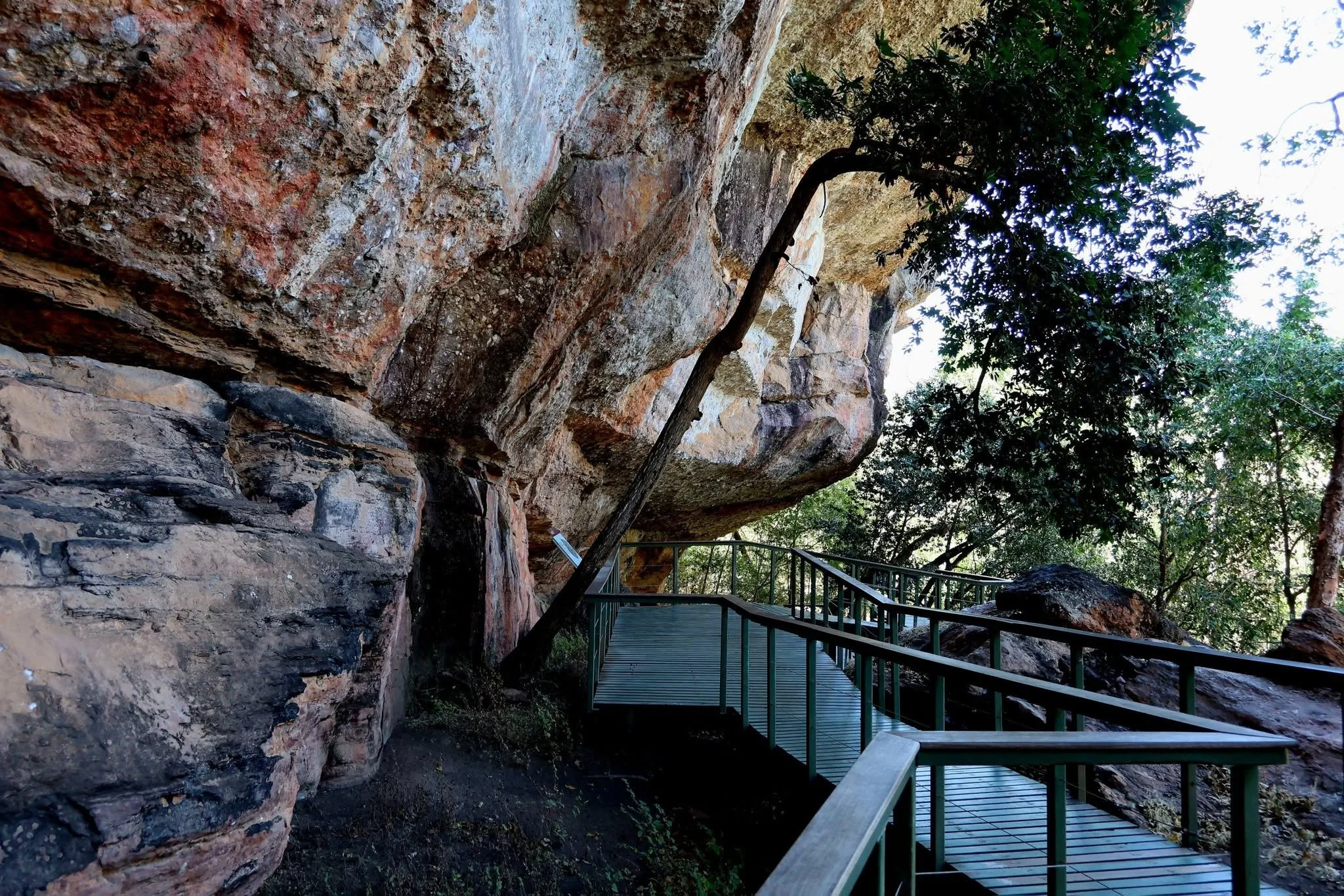
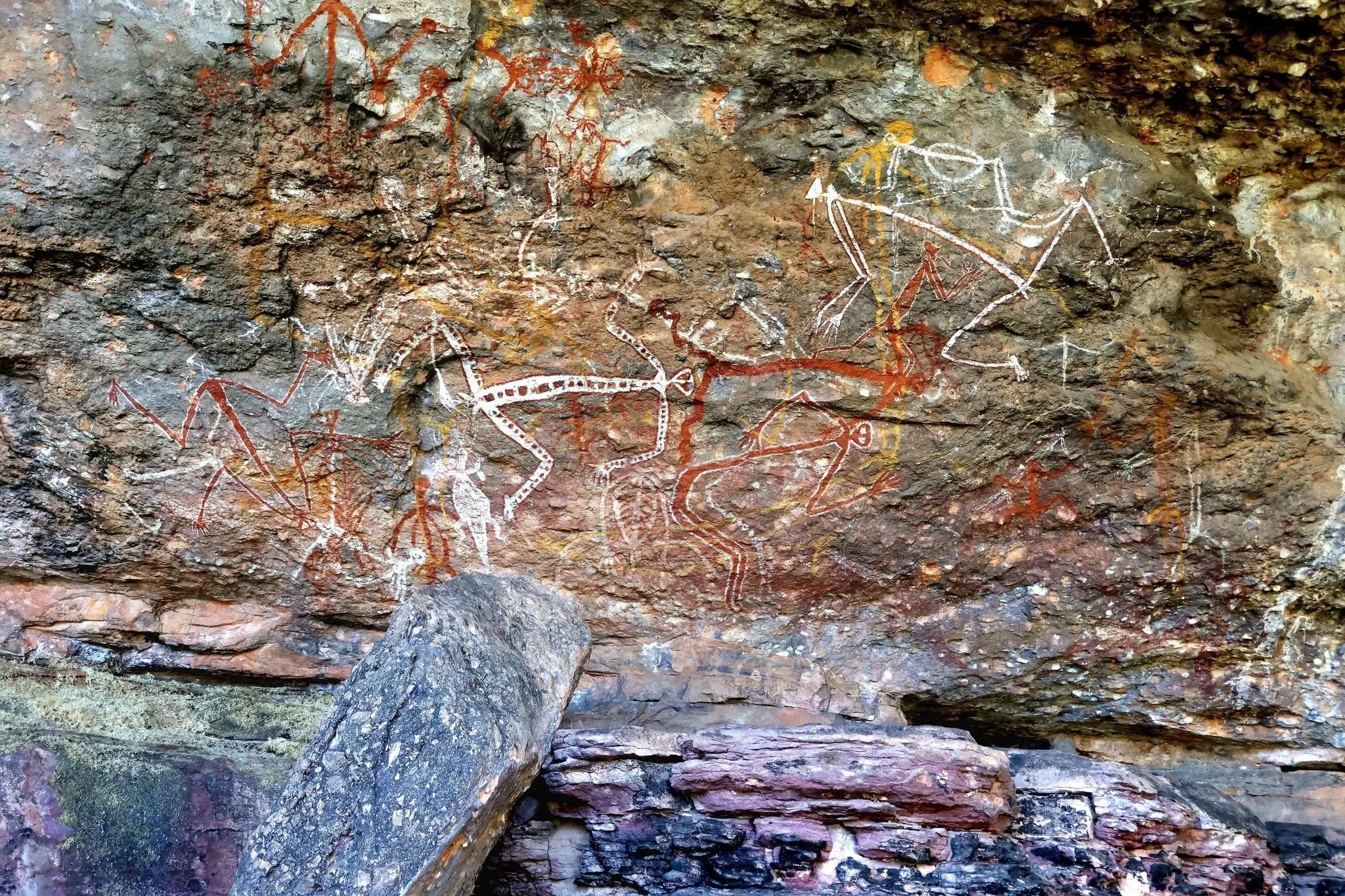
Visiting the Aboriginal rock art sites was one of those experiences that forces you to slow down.
Some of these stories and traditions have been passed through generations over thousands of years.
Standing there looking at the artwork, you're reminded that Kakadu isn't simply a national park or another tourist destination.
It's a living cultural landscape.
And there's something quite humbling about that.
Gunlom and Maguk
Then there were the waterfalls.
Gunlom Falls and Maguk were both on our list, and they gave us another completely different side of Kakadu.
This is the Australia you imagine when you think about the Top End — rugged escarpments, red dirt, tropical vegetation and beautiful waterholes tucked into the landscape.
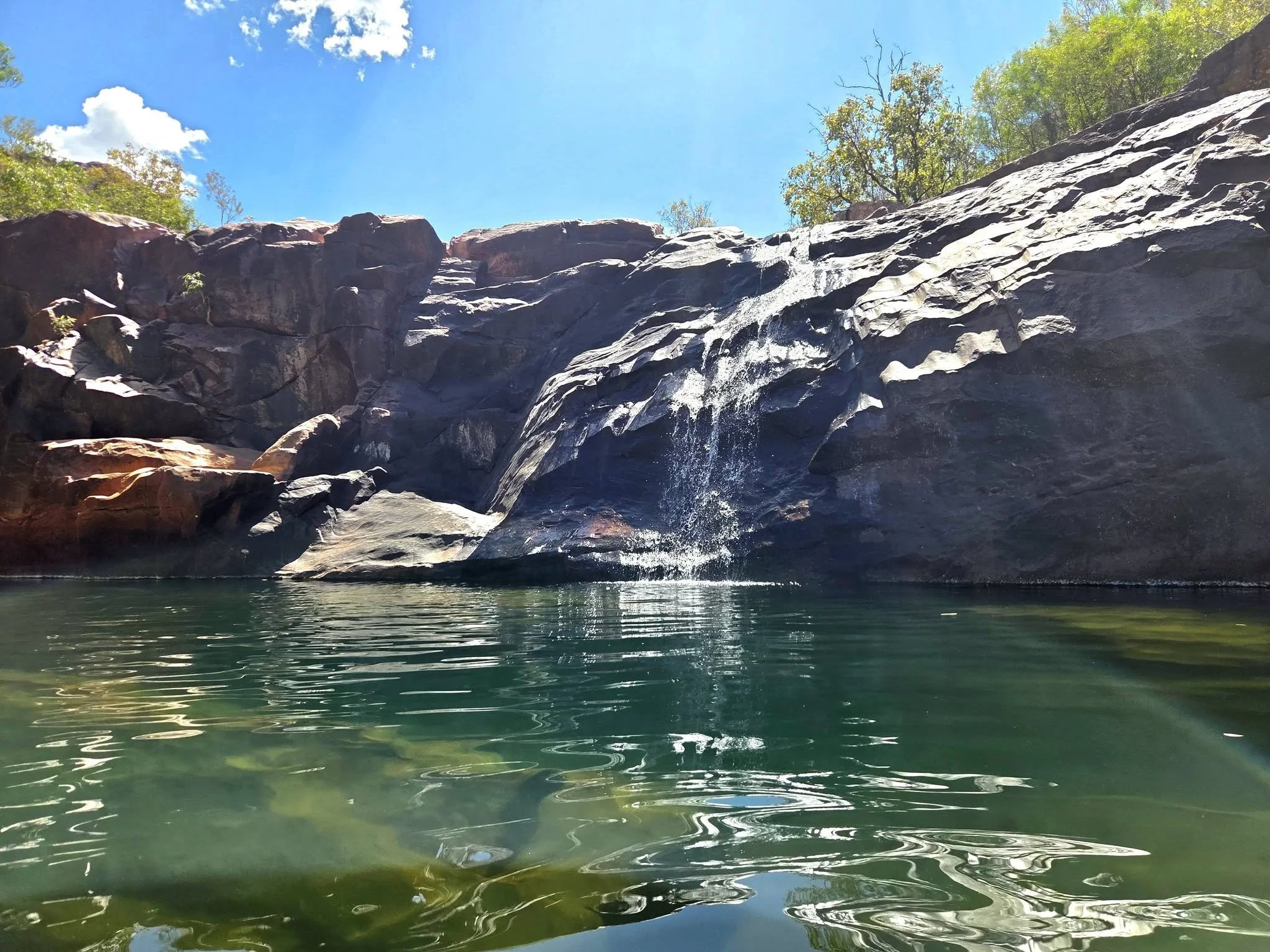
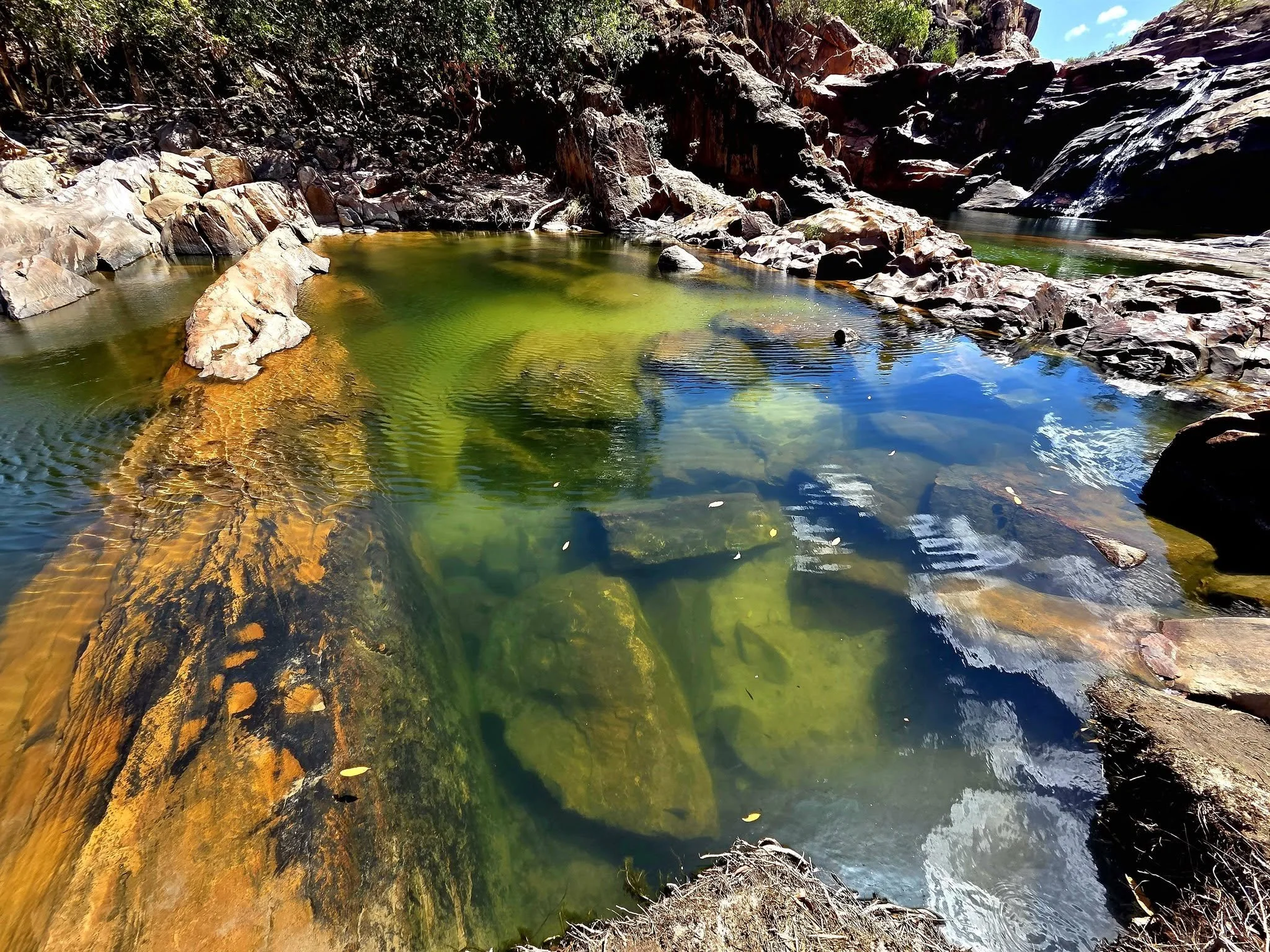
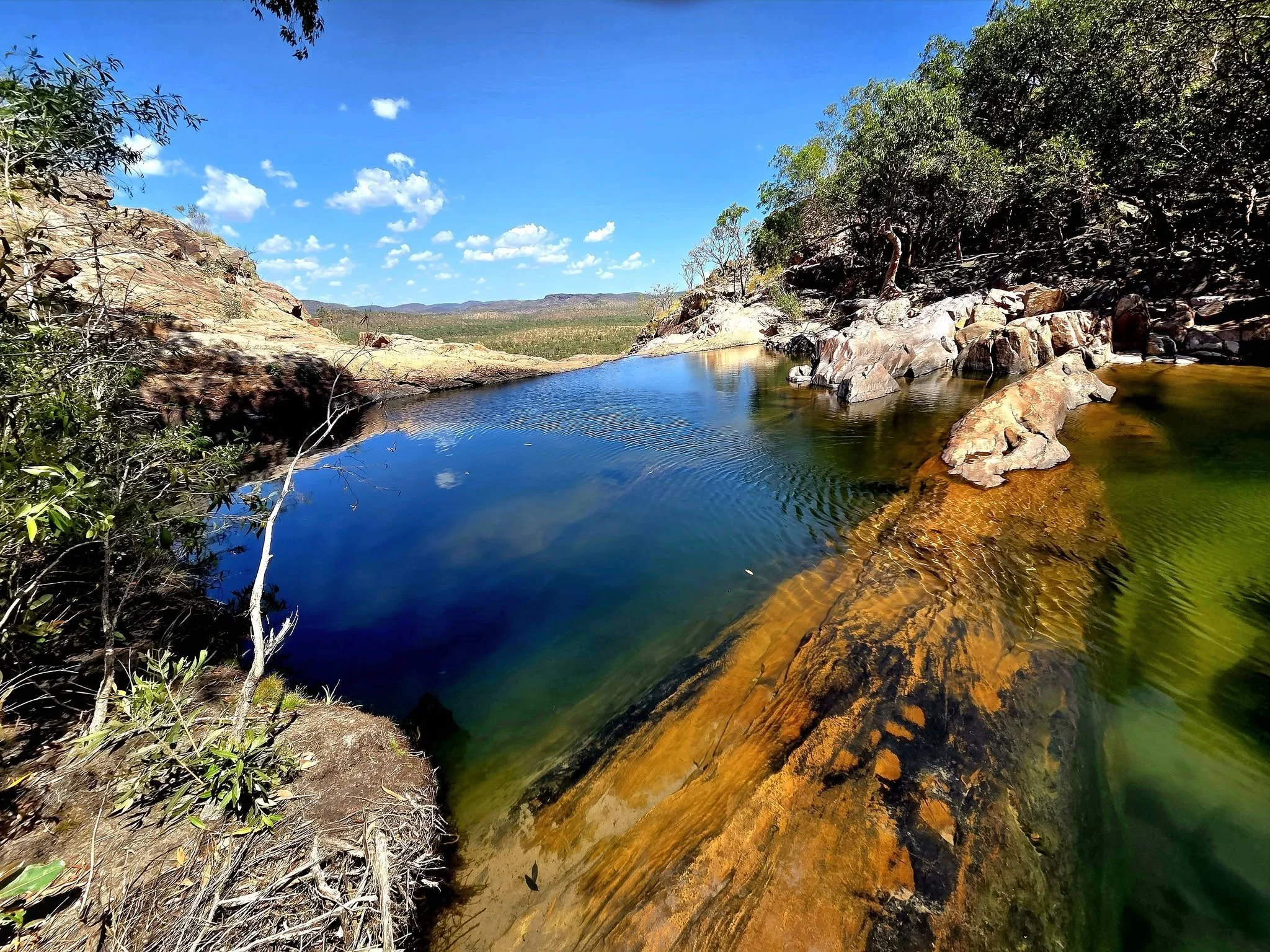
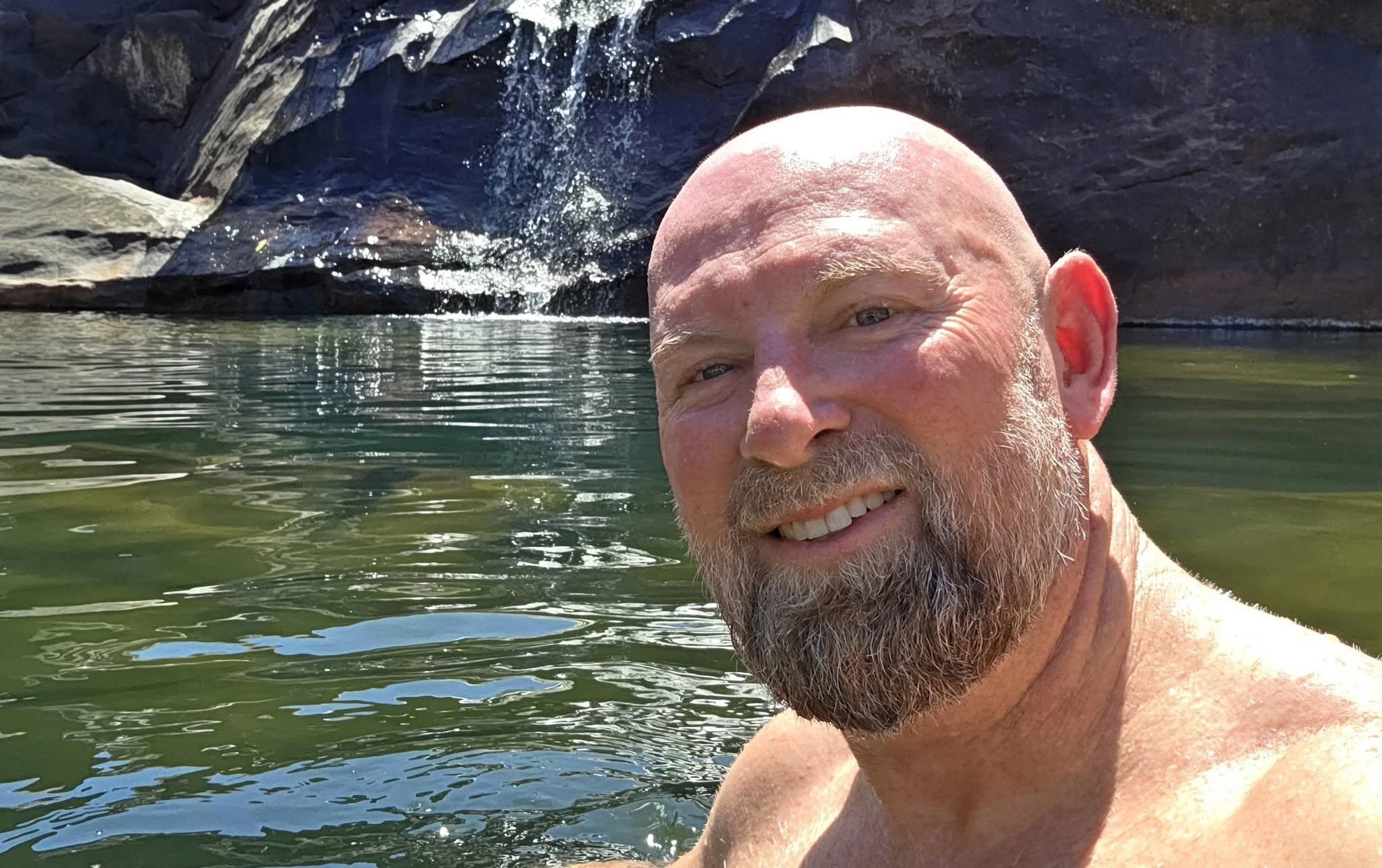
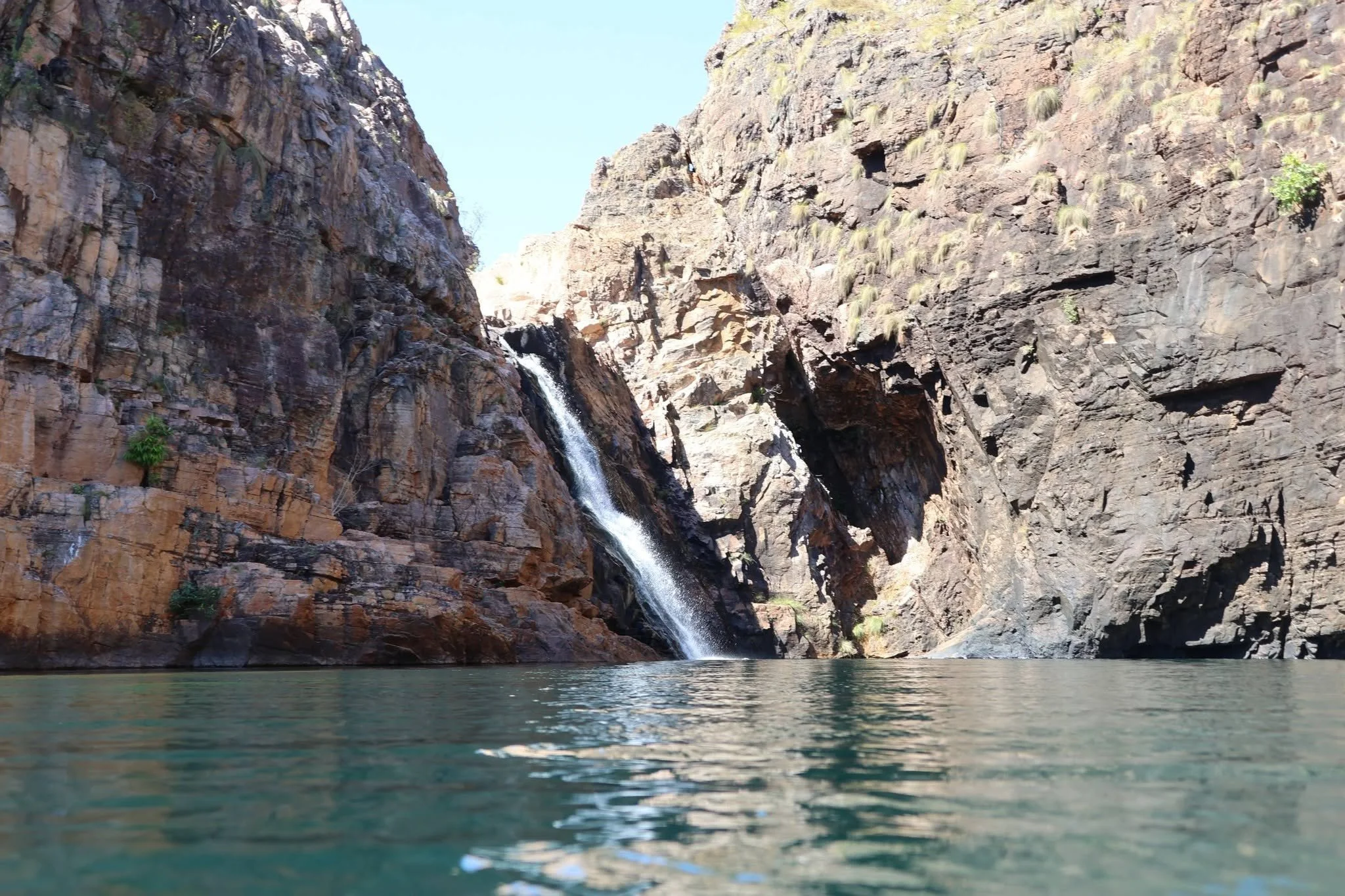
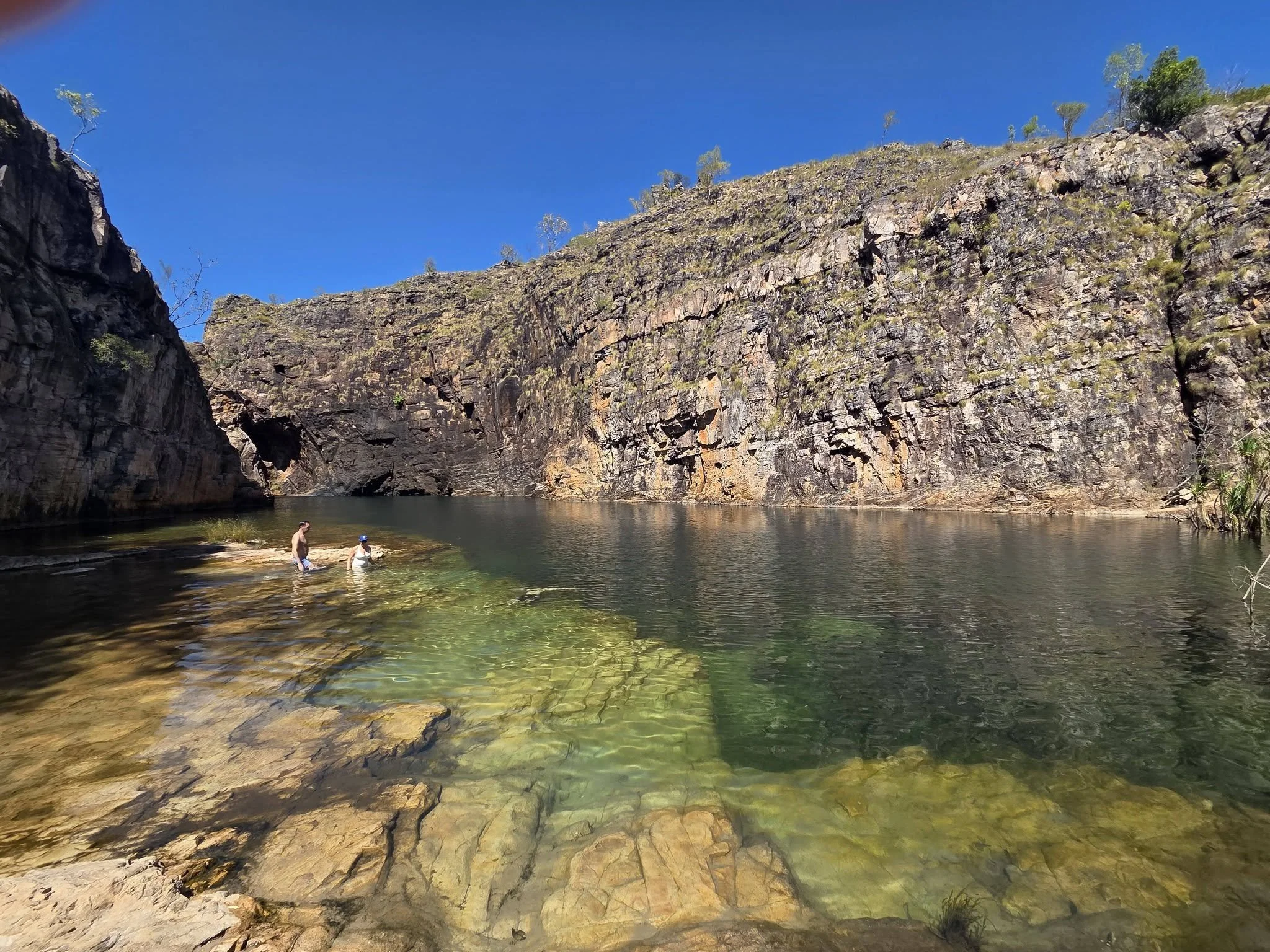
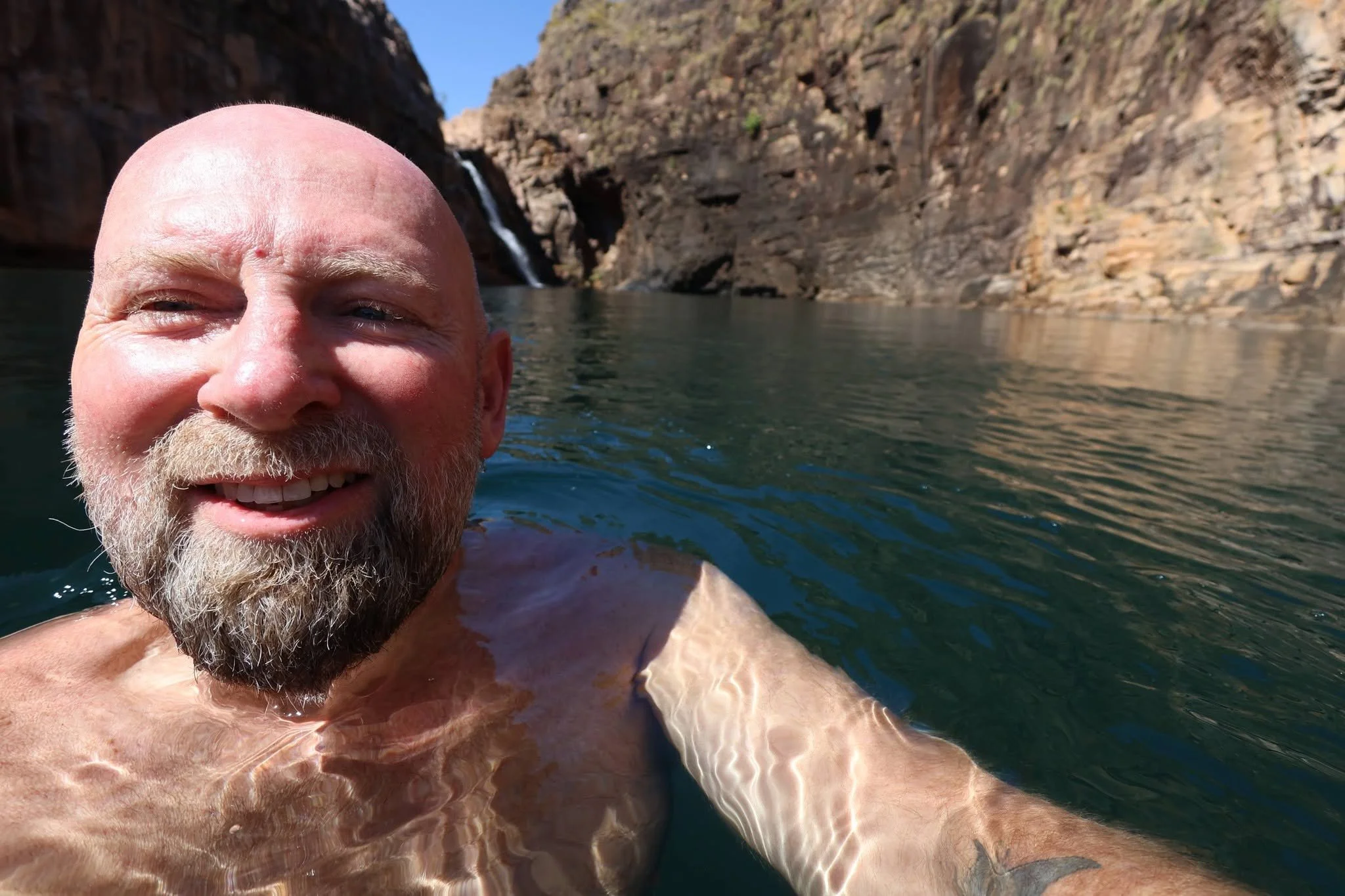
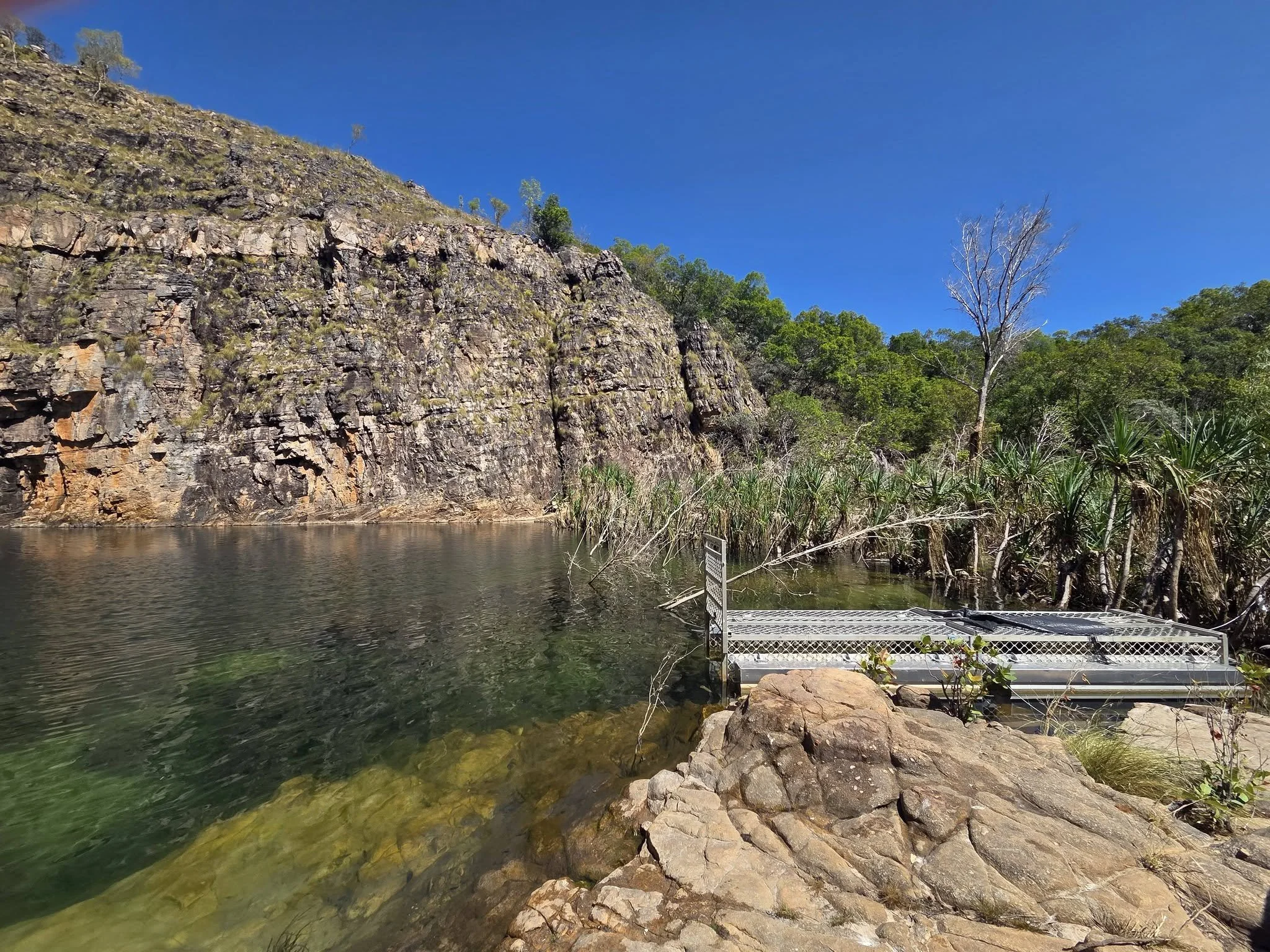
Maguk in particular was spectacular.
There's something incredibly rewarding about walking through the heat and bush before finally arriving at clear water surrounded by rock.
These are the moments you remember long after you've forgotten how many kilometres you drove to get there.
We'd also planned to visit Jim Jim Falls, one of Kakadu's most famous locations.
Unfortunately, it was closed for the season.
That's one of the realities of travelling through this part of Australia. Access is dictated by weather, water levels and road conditions rather than your holiday itinerary.
It was disappointing.
But perhaps it's also a reason to return.
High Tide at Cahills Crossing
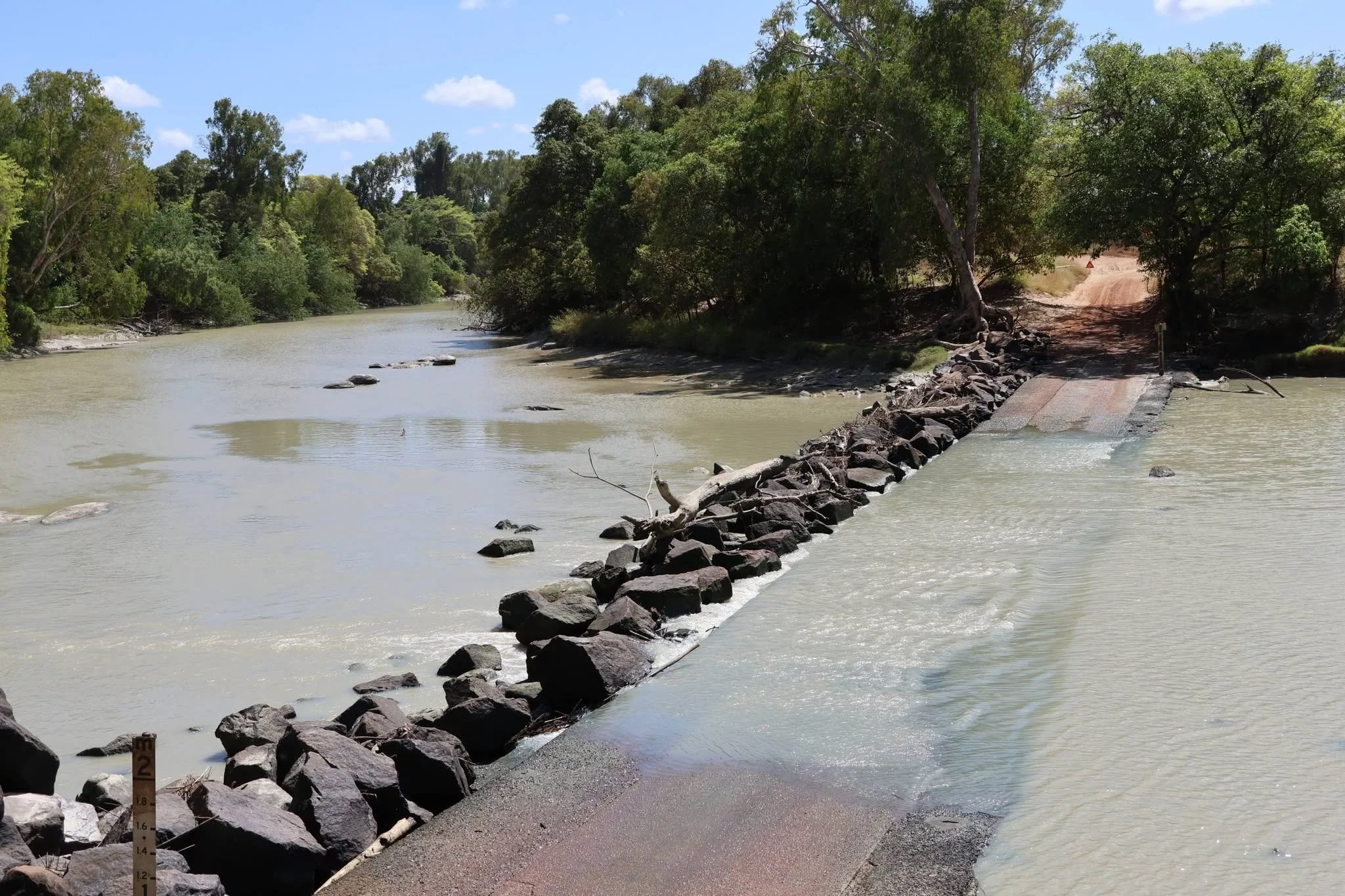
Then there was Cahills Crossing.
If you've spent any time watching videos about Kakadu, chances are you've seen this place.
The crossing runs across the East Alligator River towards Arnhem Land and has become famous for one particular reason.
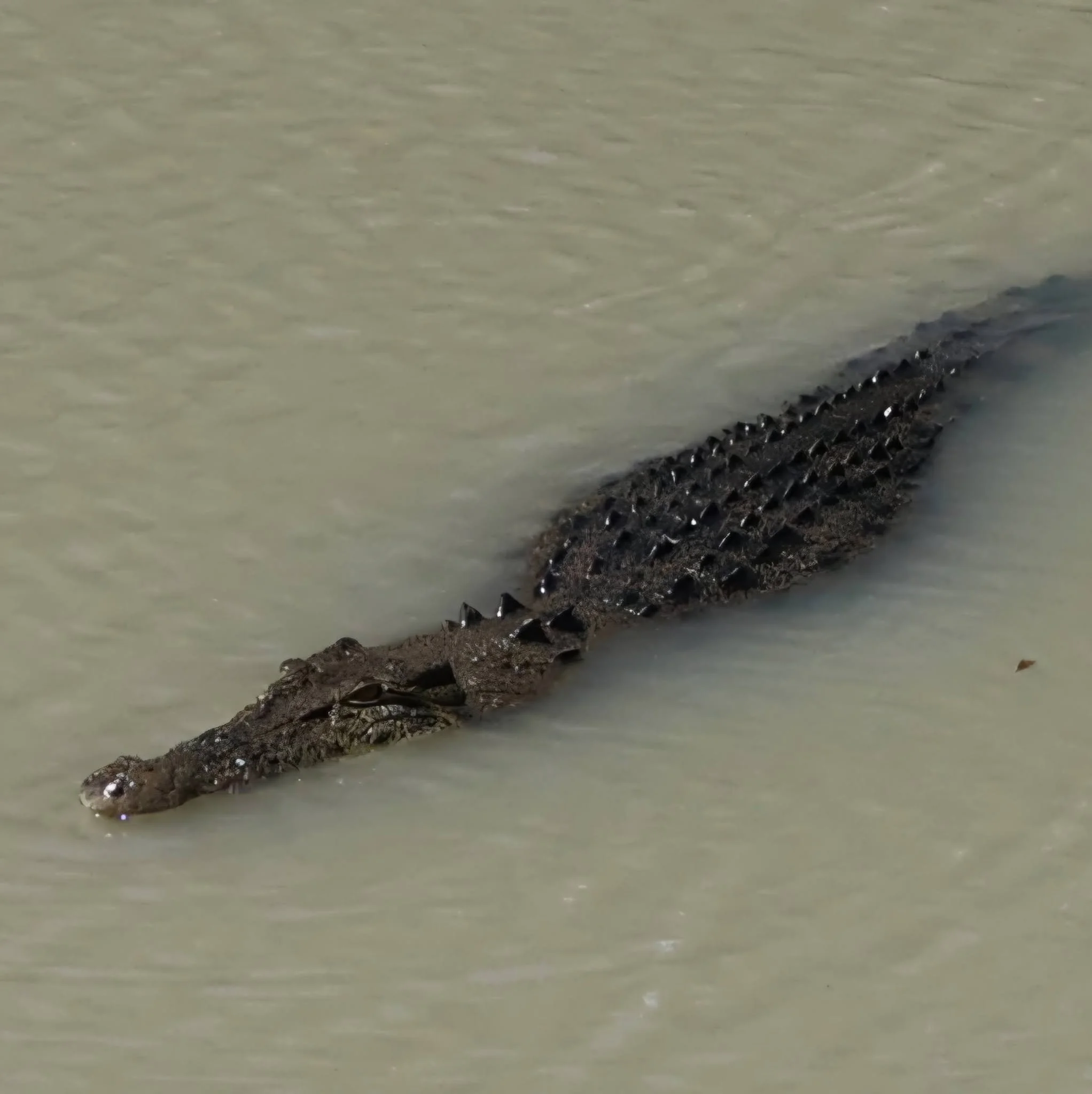
Crocodiles.
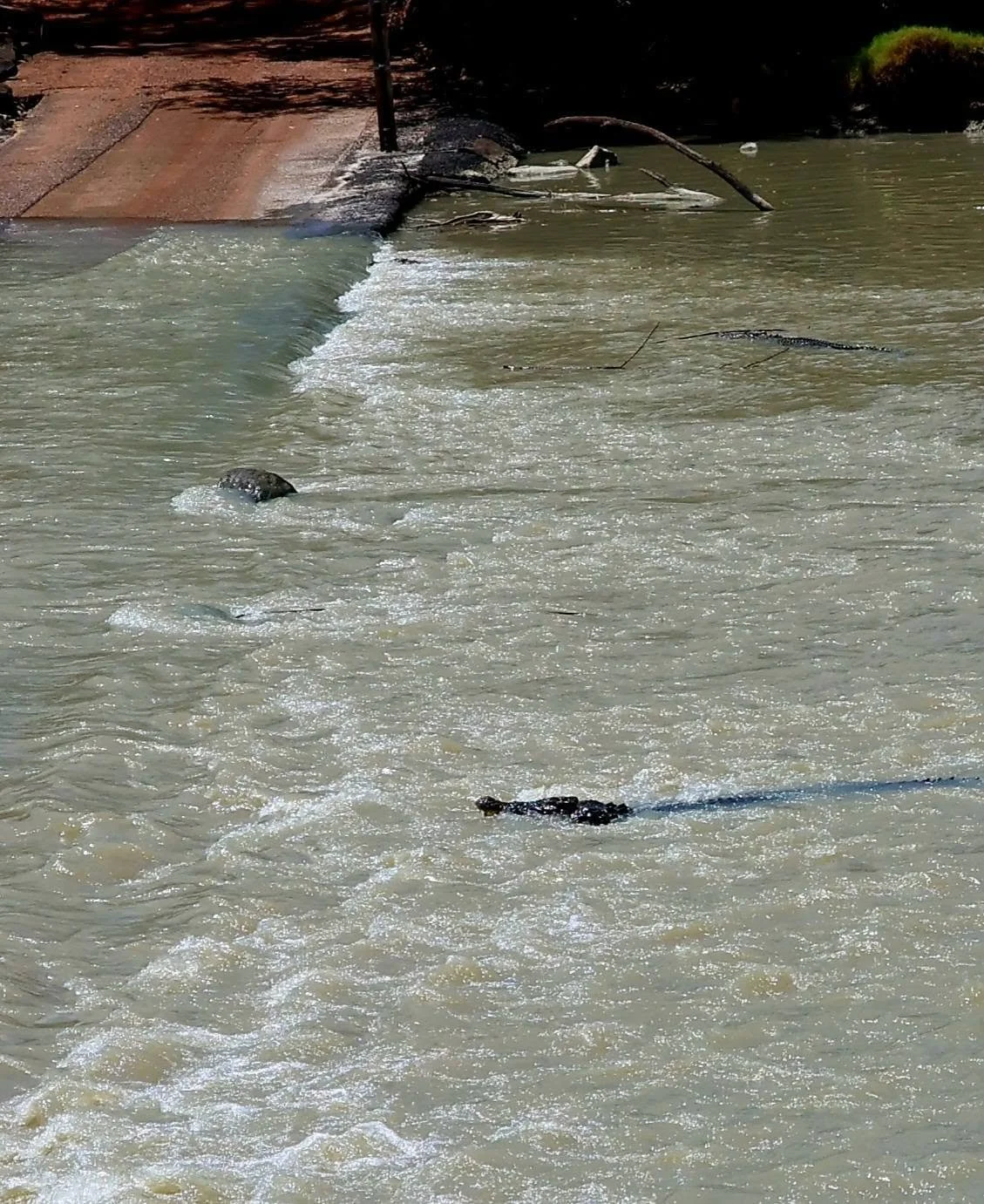
We timed our visit around high tide, when the water pushes across the crossing and creates an extraordinary spectacle.
Standing there watching the water rush over the road, you're constantly scanning the river.
Is that a log?
Did something just move?
Was that a crocodile?
It doesn't take long before you develop a very healthy respect for the signs telling you to stay away from the water.
This isn't a theme park attraction.
These are wild animals in a wild environment.
And that's precisely what makes Kakadu so special.
A Very Good Start
By the time we left Kakadu, it felt like we'd already packed an entire holiday into the first sector of the trip.
We'd eaten laksa while watching the sun set over Mindil Beach.
Walked through Darwin's wartime tunnels.
Experienced the bombing of Darwin through virtual reality.
Eaten seafood beside the harbour.
Stopped at the Humpty Doo Hotel.
Slept inside a giant crocodile.
Cruised the wetlands of Yellow Water.
Seen ancient rock art.
Explored Gunlom and Maguk.
And stood beside Cahills Crossing at high tide wondering exactly how many crocodiles were watching us.
Not everything had been perfect.
The accommodation in Darwin certainly wasn't.
Jim Jim Falls remained out of reach.
But I'm beginning to think that's part of what travelling is supposed to be.
The best trips aren't necessarily the ones where everything goes exactly according to plan.
They're the ones that give you stories.
And this was only the beginning.
There was still a lot more Northern Territory ahead of us.
And thankfully, there's Plenty Left.
Have you been to the Top End?? Let me know your favourite locations and why you love them